

Muestra inaugural del nuevo Centro Nacional de Arte Contemporáneo ubicado en el antiguo Aeropuerto de Cerrillos
curador Camilo Yañez
Centro Nacional de Arte Contemporáneo Cerrillos, Santiago, Chile
22 septiembre – 31 enero 2017
1 / Lo PRELIMINAR
Todo arte es una herramienta práctica que posee la capacidad de oxigenar nuestro conocimiento, un estimulante capaz de gatillar preguntas utilizando los sentidos, un activador del pensamiento cuya inevitable naturaleza es la reflexión, la asociación de ideas y la irradiación de poéticas. A su vez, cuando pensamos en la noción de curatoría debiera tenerse en cuenta que esta se origina a partir de la misma voluntad asociativa inclinada al diálogo, favoreciendo la discusión e interacción entre distintas obras en un espacio y un tiempo determinados.
Aquello que podría definir el trabajo curatorial es la articulación orgánica de fuerzas y energías donde se atraen y repelen ideas que, a su vez, van reformulando sobre la marcha temáticas que ayudan a lidiar con conflictos prácticos y estéticos. Por eso una exposición y su respectiva curatoría son el resultado de múltiples acuerdos, aciertos y accidentes que nos permiten leer y releer obras, hechos, y relatos.
2 / LAS IDEAS
De ahí que el Centro Nacional de Arte Contemporáneo Cerrillos inicie su puesta en marcha paulatina de actividades con la muestra “Una Imagen Llamada Palabra”, un ejercicio de trabajo colectivo y en progreso que ha implicado asumir diversos riesgos en varios niveles. La exposición fue propuesta como un manifiesto en proceso constante, un sistema de ocupación y habilitación que permitiera resignificar —material y simbólicamente— la memoria del recinto. La tarea era imaginar lo inimaginable: convertir paso a paso, el edificio del ex aeropuerto Cerrillos en un lugar vivo, cuya misión institucional sea provocar la creación, reflexión, exposición y comprensión del arte contemporáneo en Chile.
El proceso de elaboración de la muestra que inicia la marcha blanca del centro se originó hace siete meses y comenzó con tres ideas básicas, que se transformaron luego en tres líneas fundamentales al interior del proyecto. La primera de ellas consideraba que el centro y la exposición inaugural debían contar en su apertura con una cantidad importante de artistas y obras que se instalarán en la totalidad del edificio de Cerrillos
—al margen de las zonas remodeladas—, abriendo la posibilidad de que el público pudiera recorrer todo el recinto del ex terminal aéreo al mismo tiempo que recorría casi cinco décadas de arte chileno.
La segunda idea que determinó las acciones de la curatoría se hacía cargo de encontrar un eje temático transversal que fuera el punto conductor más apropiado para configurar una lectura que incorporara el trabajo de los artistas participantes en toda su heterogeneidad. Era necesario encontrar una zona de pensamiento en común. Por tal razón, la muestra se fue perfilando a partir de una ecuación compartida por todas las obras vinculadas a una práctica extendida históricamente en el arte: el uso de la palabra (como unidad lingüística básica) y de la imagen (como indicio o huella), ambas capaces de proyectar múltiples formas y relaciones en el espectador. Sin embargo, si bien se consideraron obras “históricas”, no se buscaba generar una exposición historicista, dado que no había tiempo para una revisión de estas características con todo el rigor necesario; lo que sí parecía factible era generar una exhibición con sentido diacrónico que privilegiara los puntos de contacto e interrelación entre las obras, superando de algún modo las lecturas secuenciales y rígidas asociadas de cualquier línea temporal. Así entonces, el objetivo central de la exposición fue develar y despertar relaciones desconocidas para la gran mayoría del público y de los espectadores no familiarizados con la historia del arte contemporáneo de nuestro país.
La tercera idea rectora, en tanto, planteaba la necesidad de un trabajo colectivo en todos los estratos de la muestra como único sistema operativo posible. El desafío era coordinar en una misma dirección los casi cincuenta artistas convocados, los cinco teóricos invitados, los cuatro coleccionistas comprometidos, varios gestores, diseñadores, editores, profesores de arte y mediadores, que se sumaban a una cantidad importante de funcionarios del Consejo de la Cultura con un objetivo común: levantar y construir un imaginario nuevo en materia de artes visuales que sea capaz de despertar inéditas energías al interior de nuestra escena.
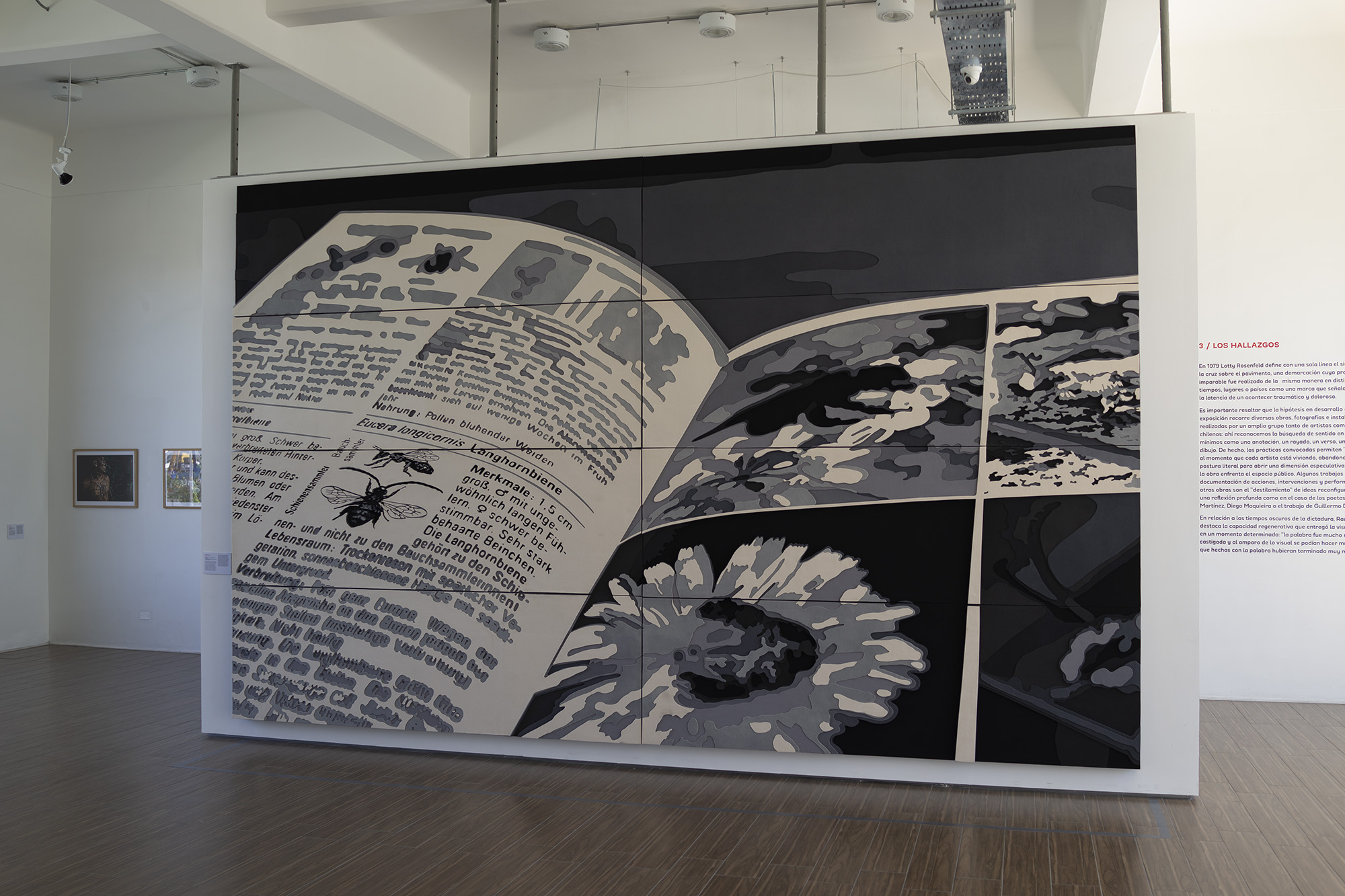
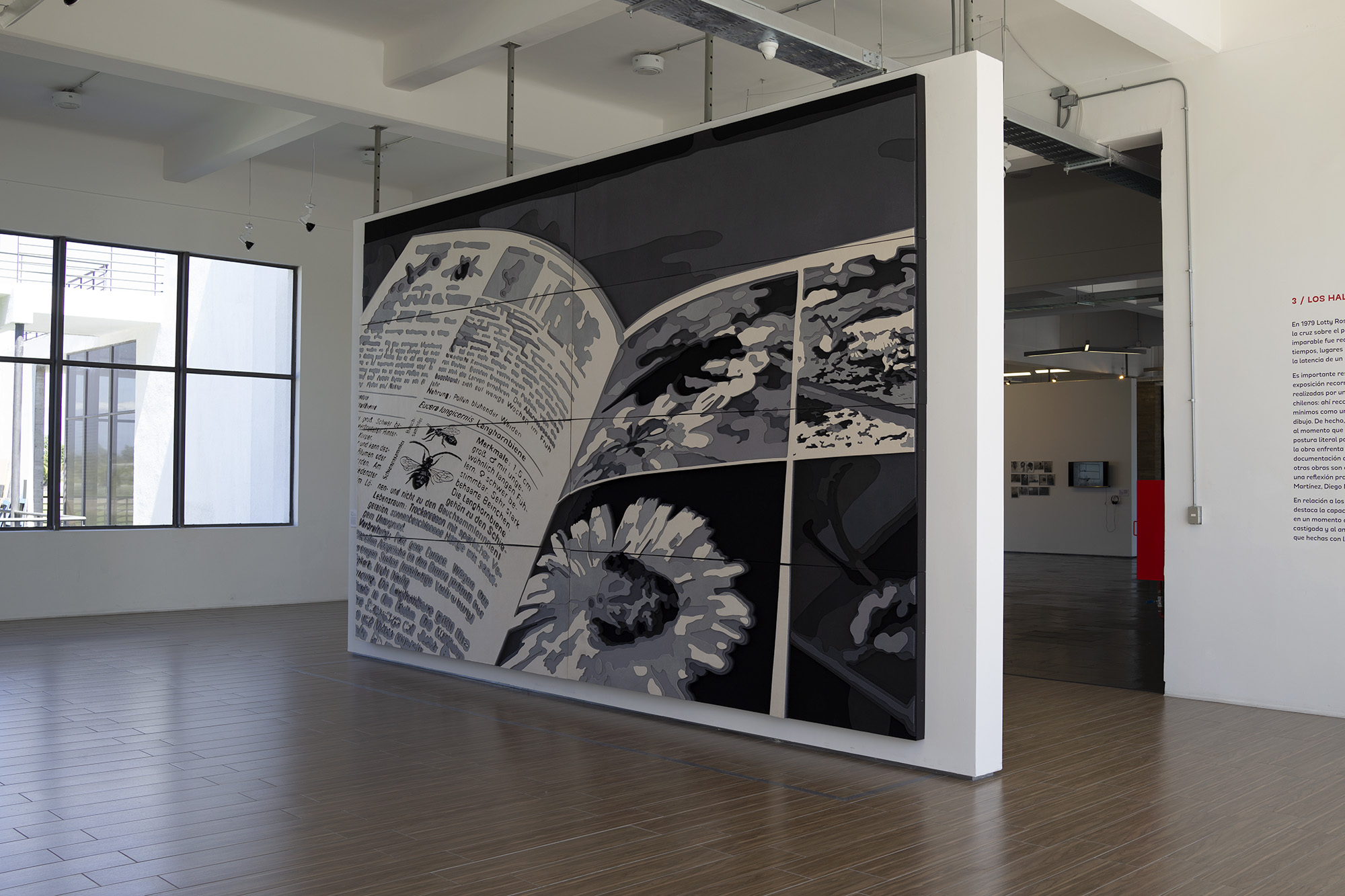
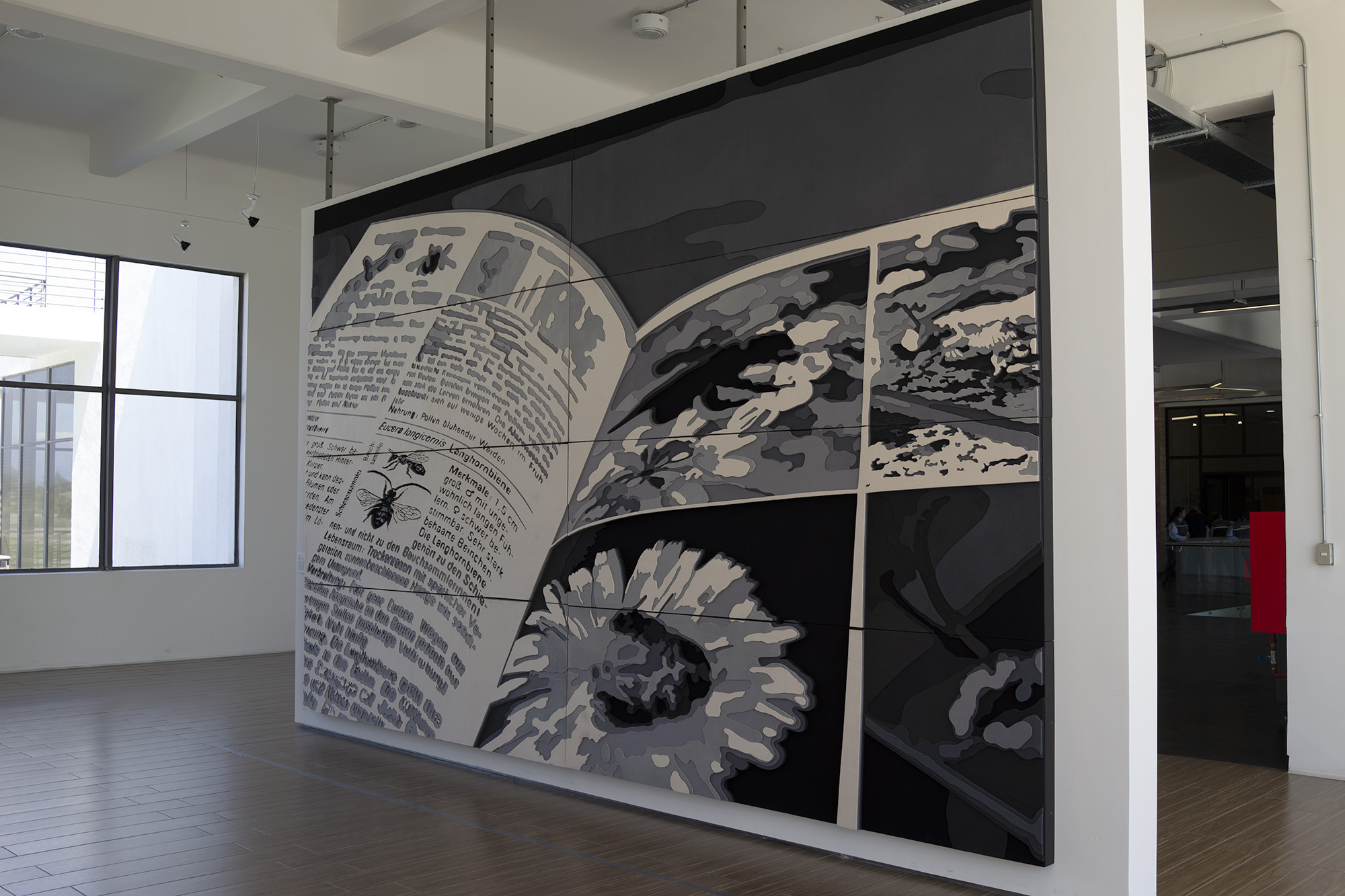
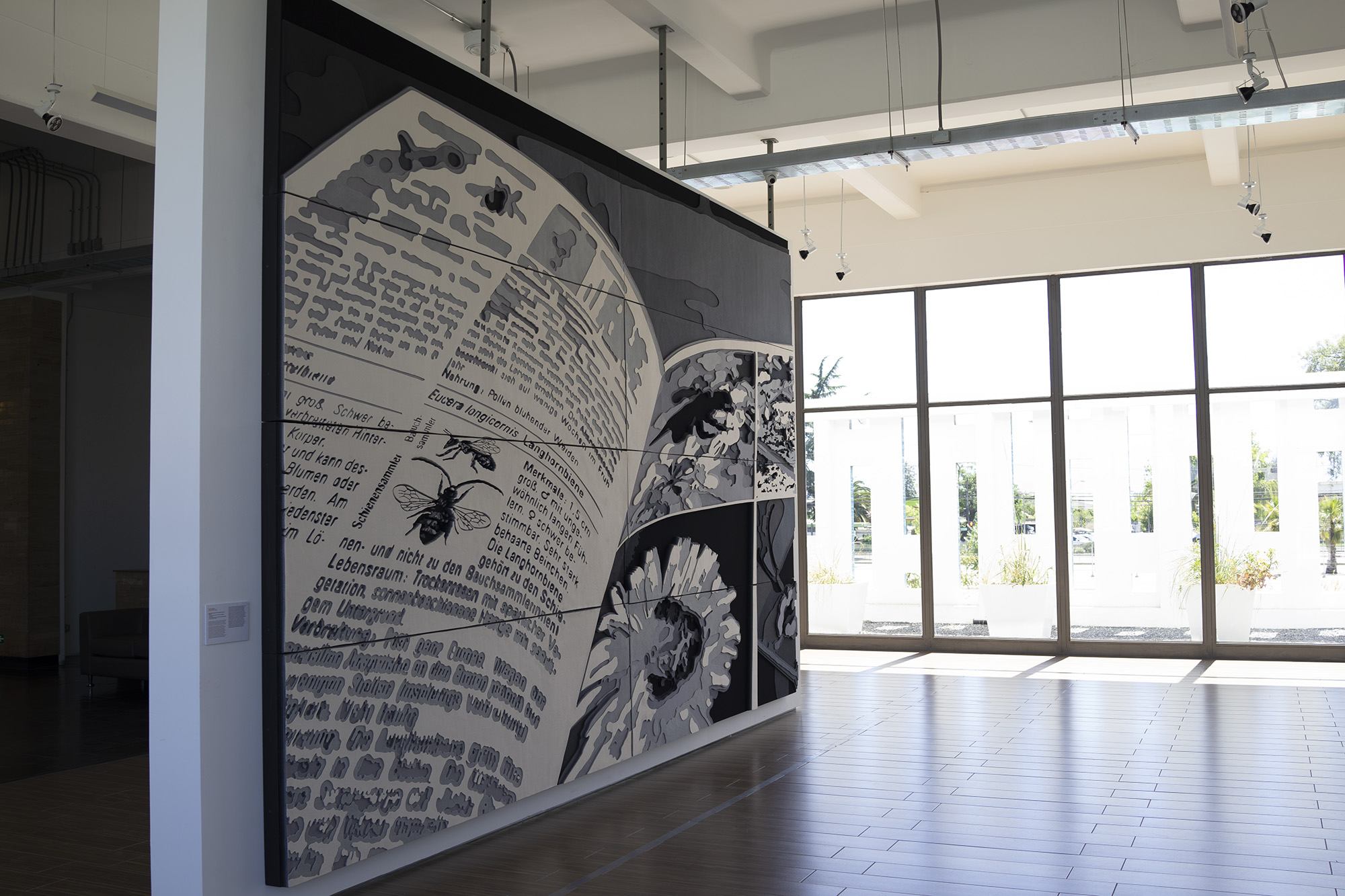
Obra exhibida:
Inaugural exhibition of the new National Center of Contemporary Art located in the old Cerrillos Airport
Curator Camilo Yañez
Cerrillos National Center of Contemporary Art, Santiago, Chile
September 22nd, 2016 – January 31st, 2017
1 / THE PRELIMINARY
All art is a practical tool that has the capacity to oxygenate our knowledge, a stimulant capable of triggering questions using the senses, an activator of thought whose inevitable nature is reflection, the association of ideas, and the irradiation of poetics. In turn, when we think about the notion of curatorship, we should bear in mind that it originates from the same associative will inclined towards dialogue, favoring discussion and interaction between different works in a given space and time.
What could define curatorial work is the organic articulation of forces and energies where ideas attract and repel each other, which in turn reformulate themes on the fly that help deal with practical and aesthetic conflicts. That is why an exhibition and its respective curatorship are the result of multiple agreements, successes, and accidents that allow us to read and reread works, events, and stories.
2 / THE IDEAS
Hence, the Cerrillos National Center for Contemporary Art began its gradual launch of activities with the exhibition “An Image Called Word,” a collective work in progress that involved taking various risks on several levels. The exhibition was proposed as a constantly evolving manifesto, a system of occupation and habilitation that would allow the memory of the site to be reinterpreted, both materially and symbolically. The task was to imagine the unimaginable: to gradually transform the former Cerrillos airport building into a living space whose institutional mission is to stimulate the creation, reflection, exhibition, and understanding of contemporary art in Chile.
The process of developing the exhibition that marks the center’s soft opening began seven months ago and started with three basic ideas, which were then transformed into three fundamental lines within the project. The first of these considered that the center and the inaugural exhibition should feature a significant number of artists and works that would be installed throughout the Cerrillos building
—apart from the remodeled areas—, opening up the possibility for the public to tour the entire former airport terminal while also touring almost five decades of Chilean art.
The second idea that determined the curatorial actions was to find a cross-cutting thematic axis that would be the most appropriate guiding point for configuring a reading that would incorporate the work of the participating artists in all its heterogeneity. It was necessary to find a common ground for thought. For this reason, the exhibition took shape based on an equation shared by all the works linked to a historically widespread practice in art: the use of words (as a basic linguistic unit) and images (as clues or traces), both capable of projecting multiple forms and relationships onto the viewer. However, although the works were considered “historical,” the aim was not to create a historicist exhibition, as there was not enough time for a review of this nature with all the necessary rigor. What did seem feasible was to create an exhibition with a diachronic meaning that would privilege the points of contact and interrelation between the works, somehow overcoming the sequential and rigid readings associated with any timeline. Thus, the central objective of the exhibition was to reveal and awaken relationships unknown to the vast majority of the public and viewers unfamiliar with the history of contemporary art in our country.
The third guiding principle, meanwhile, proposed the need for collective work across all strata of the exhibition as the only possible operating system. The challenge was to coordinate the nearly fifty artists invited, the five guest theorists, the four committed collectors, several managers, designers, editors, art teachers, and mediators, who joined a significant number of officials from the Council for Culture with a common goal: to raise and build a new imaginary in the visual arts that is capable of awakening unprecedented energies within our scene.
Exhibited work: