

2005
Instalación de 30 fotografías (una por día) compuesta por 135 módulos de 20 x 20 cm c/u, en imanes sobre panel metálico.
Medidas totales 300 x 180 cm
“Transformer”
Centro Cultural Matucana 100, Santiago, Chile
2005
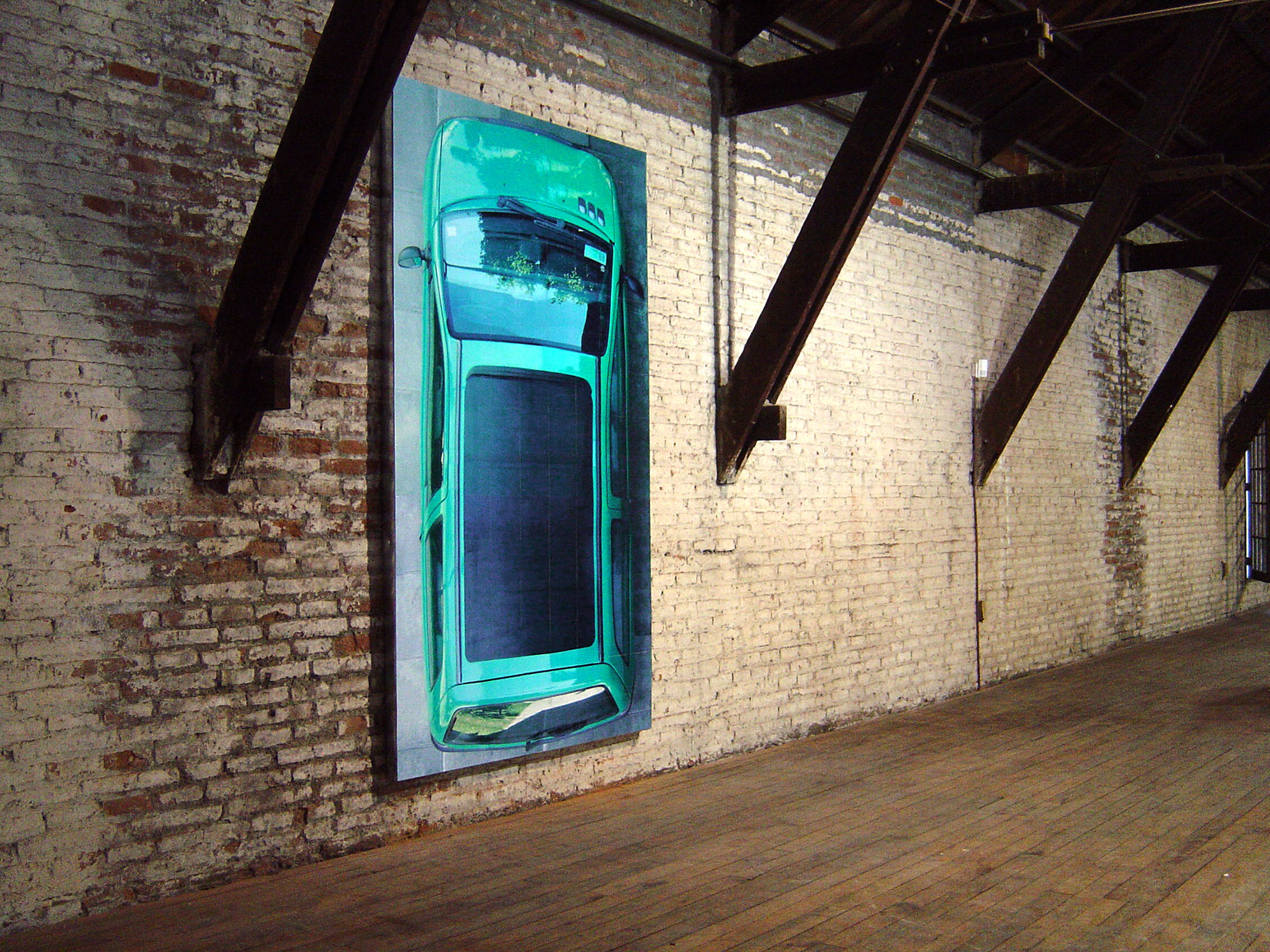
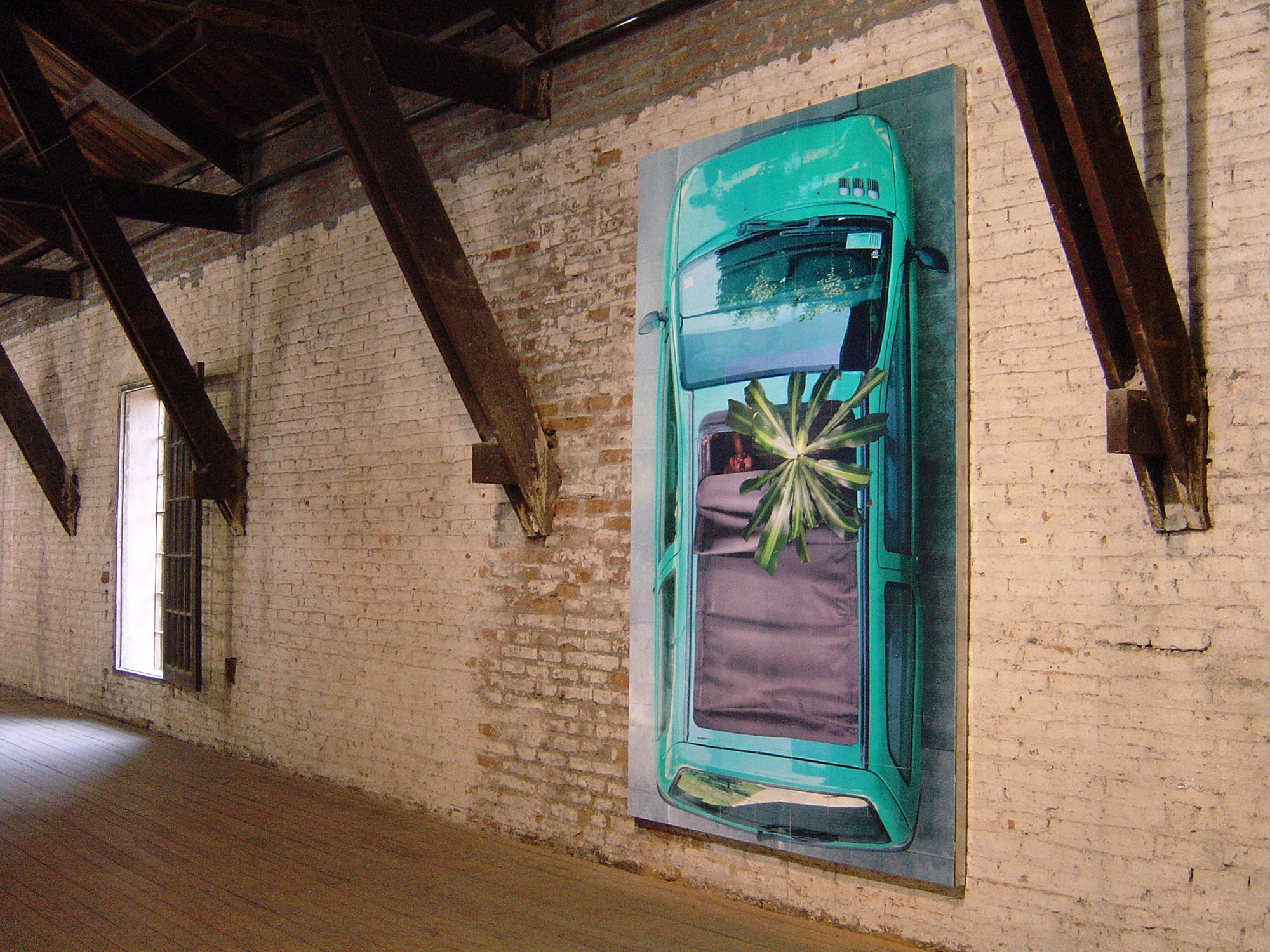
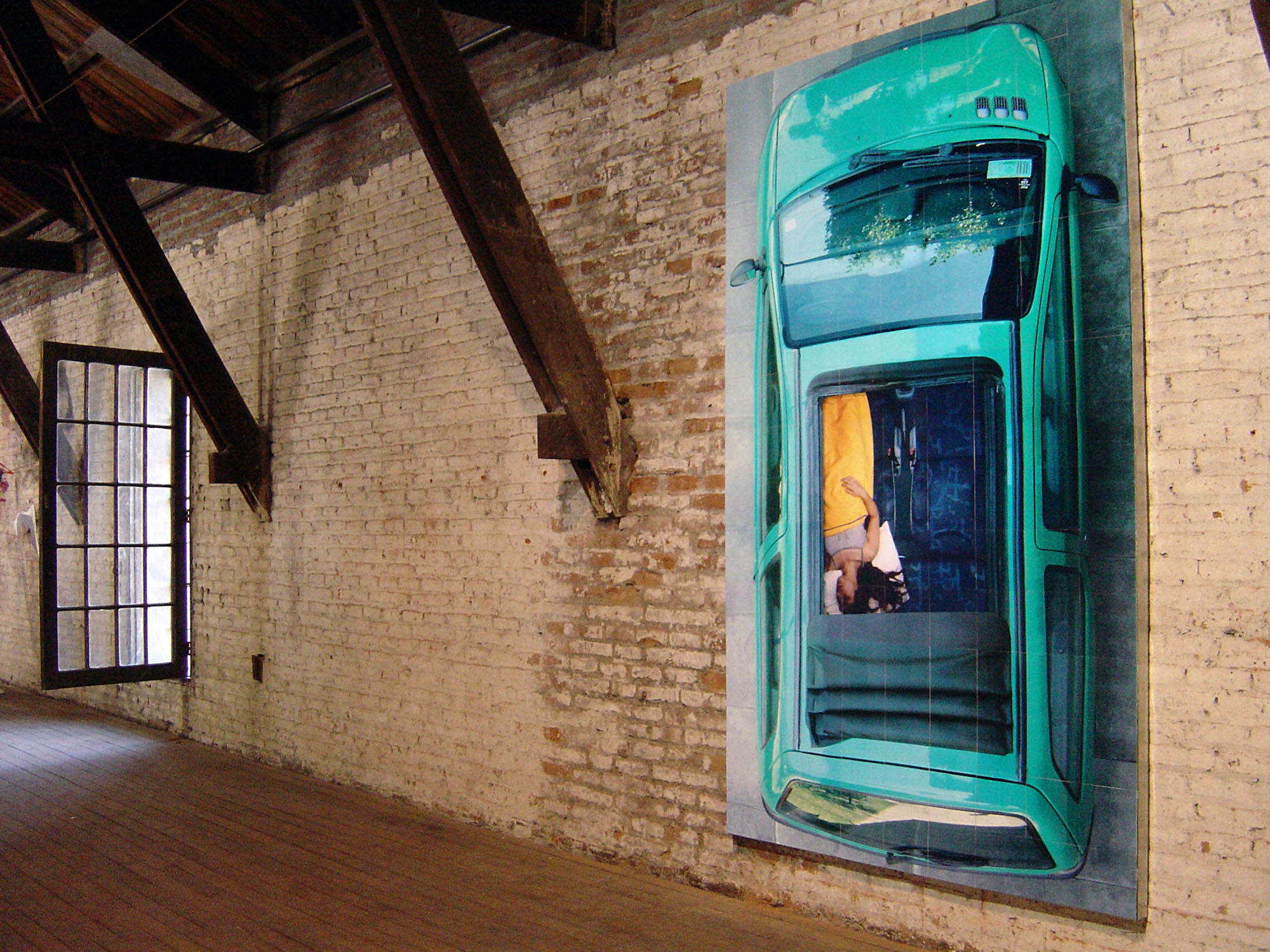
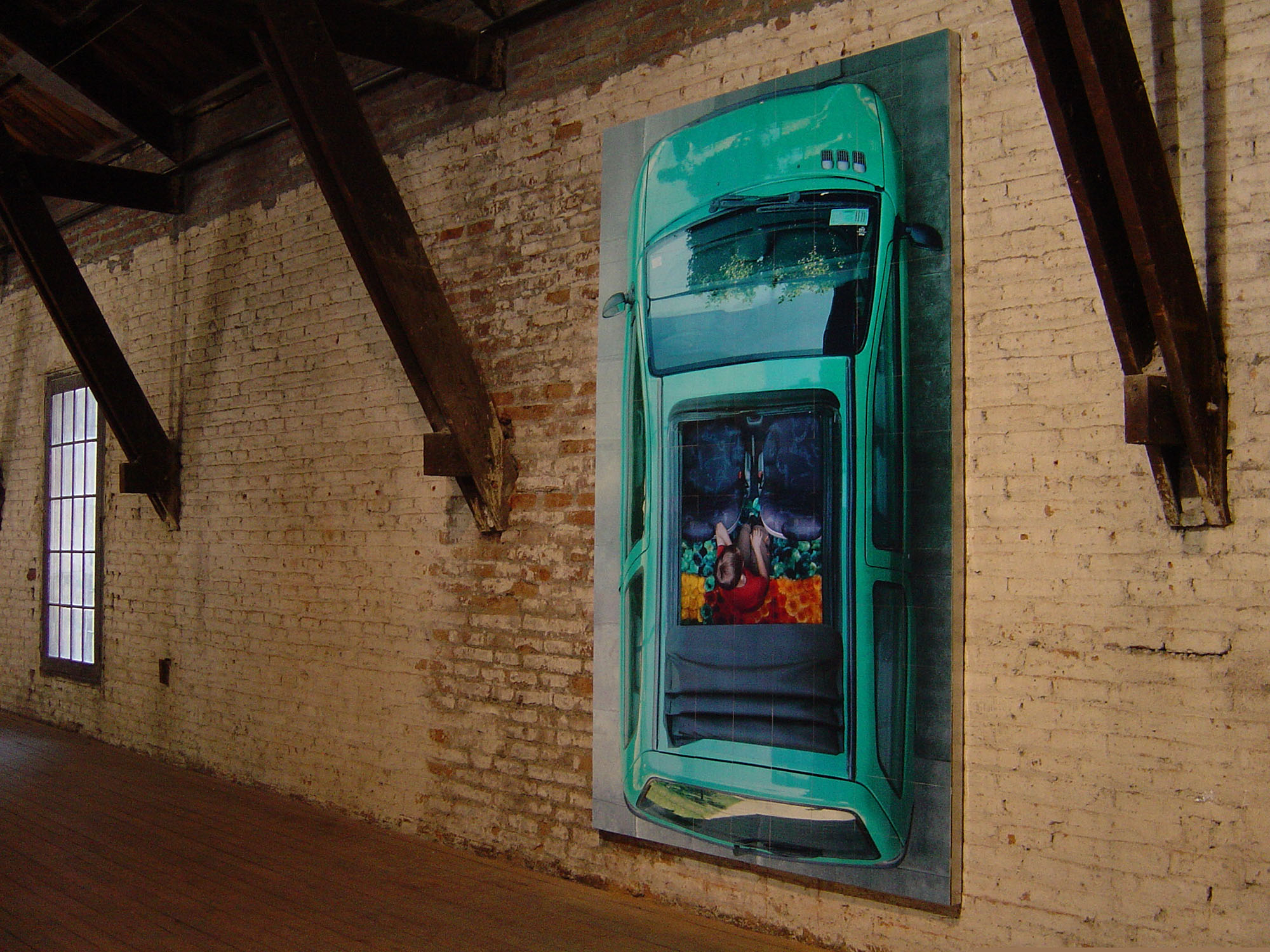
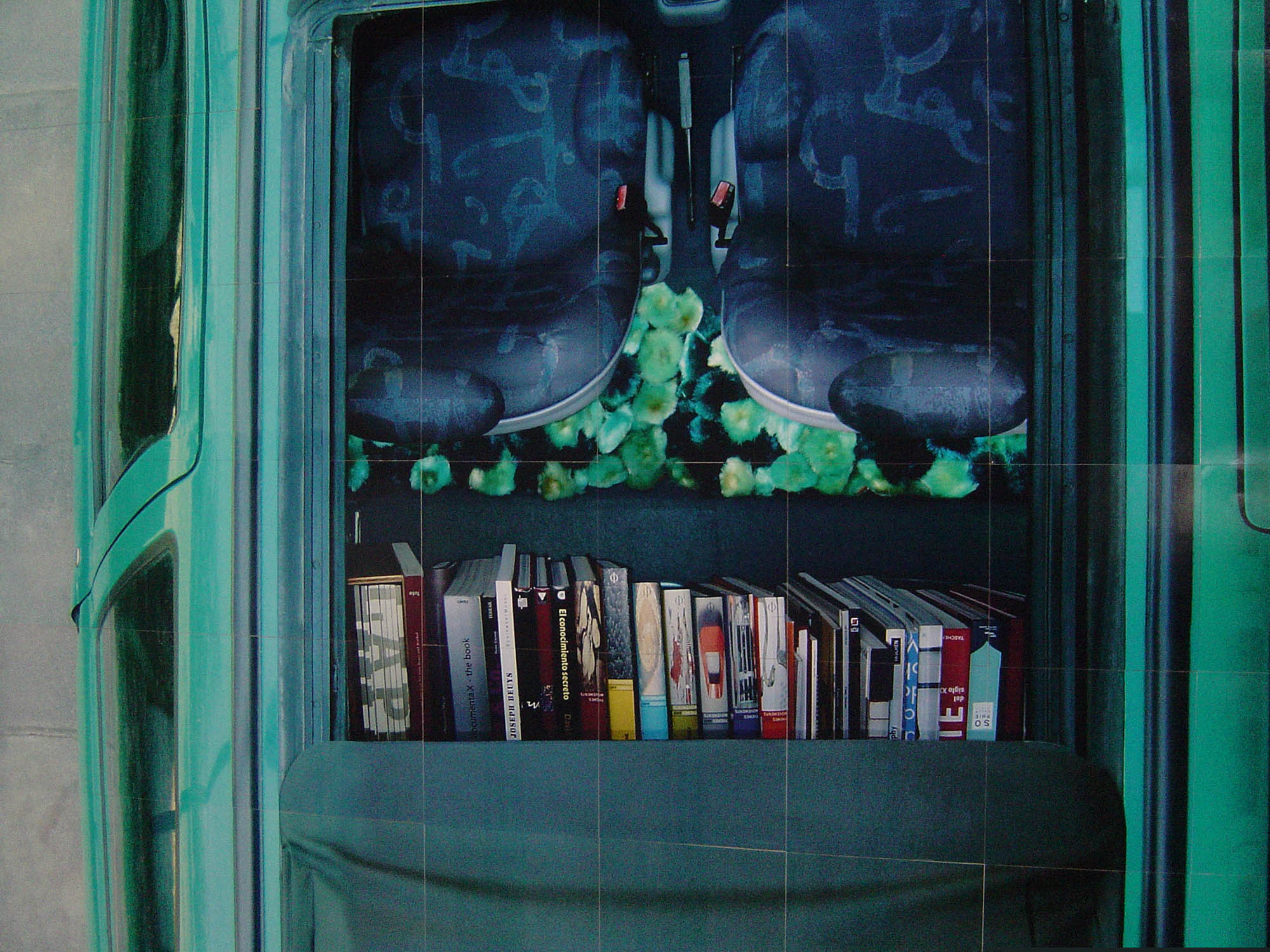
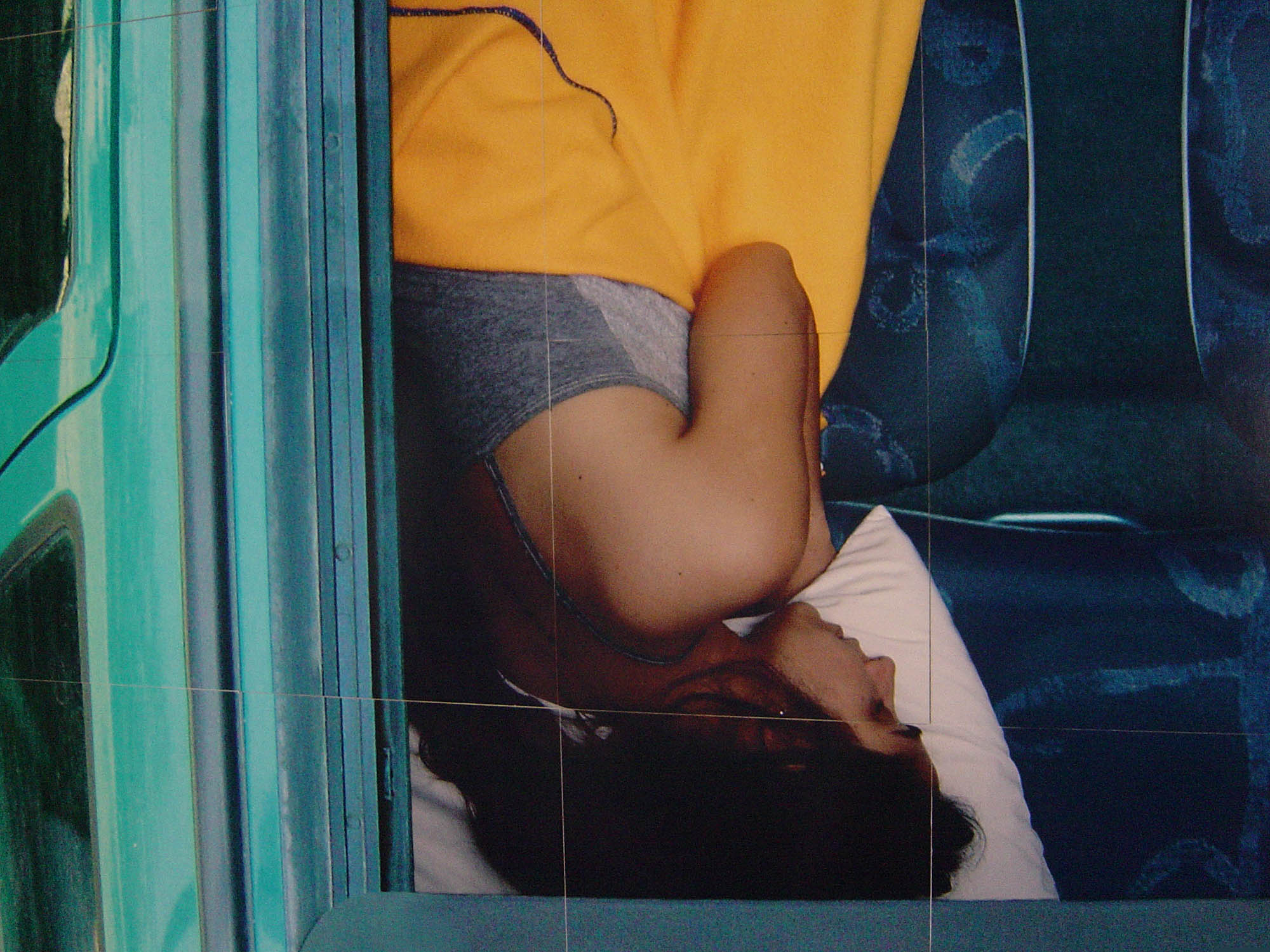
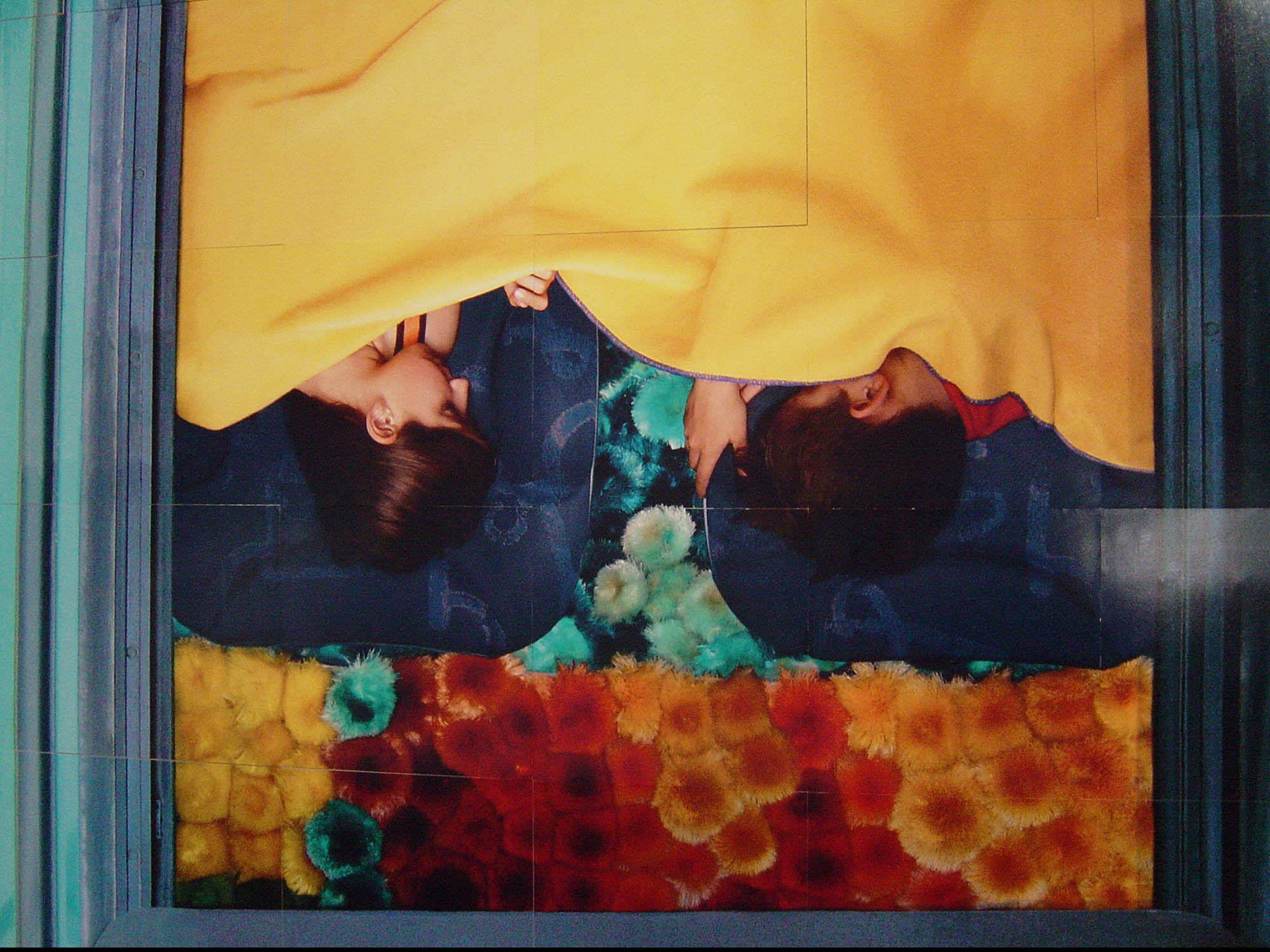
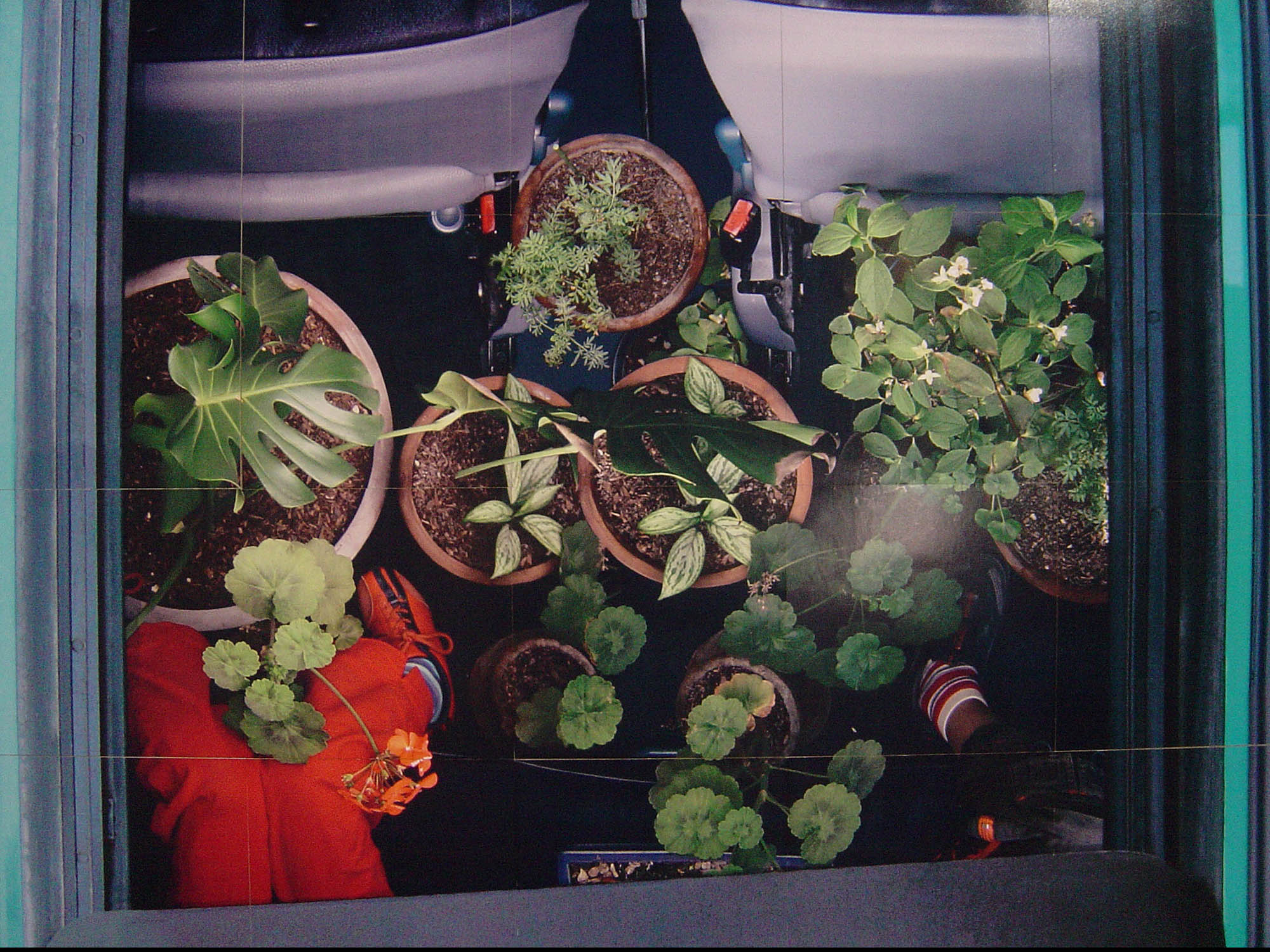
El año 2005 fui convocada por el artista visual Mario Navarro a participar en la muestra “Transformer”; en ella, el proyecto debía responder a la exigencia de cambiar cada día, a lo largo del mes de duración de la exhibición. Surgió así la idea de realizar una especie de retrospectiva, un proyecto que me permitiera re-visitar más de diez años de trabajo, de modo que decidí fotografiar mi automóvil –un clásico Renault Twingo del año 1996–, cuya particularidad es tener techo descapotable. Para transmobile entonces, fui llenando mi auto con una serie de objetos y materiales que habían servido para la producción de muchas de mis obras anteriores, fotografiándolo cenitalmente, de manera que era posible ver aquellos objetos a través de la “ventana” abierta del techo.
El resultado fue una fotografía a escala natural de mi automóvil, que fue cambiando día a día, mostrando en su interior distintos objetos: bolsas de supermercado, libros, plantas y juguetes; materiales de trabajo: hilos de bordar, lápices de colores, flores de cardos teñidas; pero también mostrándome a mí y a mis hijos en escenas cotidianas que durante mucho tiempo formaron parte de las preocupaciones temáticas de mi investigación artística. Esta retrospectiva temprana de algún modo se instaló –al igual que 203 fotografías siete años antes– como una revisión que me permitiría continuar mi investigación, incorporando nuevas metodologías y nuevos sistemas de producción en mi trabajo.
[Mónica Bengoa ha trabajado durante largo tiempo en formas de introspección que se han materializado en obras fotográficas que van desde el acercamiento a la relación entre cuerpo, geografía y temperatura; entre cuerpo y accidente y en forma más reciente entre cuerpo y domesticidad. Sus trabajos son una profunda mirada sobre el pequeño tiempo de la toma fotográfica y el infinito y difunto periodo en que la fotografía se perpetúa hasta el infinito. Cada vez que Mónica Bengoa, o sus hijos o sus pertenencias aparecen en sus obras siempre existe la atención de la mirada sobre la privacidad del hogar y finalmente sobre su propio cuerpo. En Transformer, su obra Transmobile, a través de placas magnéticas intercambiables como las que se ocupan para decorar refrigeradores caseros, contienen en su superficies fragmentos fotográficos del auto Renault Twingo © de su propiedad. El auto tiene un techo corredizo que permite ver su interior desde una toma cenital. Durante los días de exposición, la obra fue modificada como un rompecabezas donde el interior del auto fue ocupado por diferentes objetos; libros de arte bolsas del supermercado, restos de otras obras, nuevamente sus hijos, ella misma, etc.
¿Es posible ver una correspondencia en esta obra entre cuerpo y auto o es otra de las aristas que aborda la contemporánea polémica entre diseño y arte? En este caso habría que inclinarse por la primera opción. Trabajos anteriores a este siempre han definido una geometría ortogonal y fragmentada que inevitablemente remite al cuerpo y su precariedad. En esta obra, la fragilidad ha sido reemplazada por la rigurosa programación de su secuencia, pero aquel control se vuelve opaco ante la sensación multipolar de cada fragmento que construye el cuerpo final. Por lo tanto, Transmobile es una obra dotada de una orgánica potencialmente cercana a la figura del rizoma donde cada fragmento es en sí mismo un eslabón estructural, es decir, como Deleuze y Guattari lo mencionan, “… Nunca hay que preguntar qué quiere decir un libro, significado o significante, en un libro no hay nada que comprender, tan sólo hay que preguntarse con qué funciona, en conexión con qué hace pasar intensidades, en qué multiplicidades introduce y metamorfosea la suya, con qué cuerpos sin órganos hace converger el suyo…”]
Mario Navarro, catálogo Transformer, 2005
2005
Installation of 30 photographs (1 per day),
composed by 135 pieces of 20 x 20 cm (7,8 x 7,8 in) each, with magnets on metallic panel.
“Transformer”
Centro Cultural Matucana 100, Santiago, Chile
2005
In 2005 I was invited to participate at the “Transformer” exhibition curated by visual artist Mario Navarro. The project had to respond to the requirement to change every day, throughout the month of duration of the exhibition. I had the idea of making a kind of retrospective show, a project that allowed me to revisit more than ten years of work; so I decided to photograph my automobile –a classic 1996 Renault Twingo–, that has the distinctiveness to have a fold away roof. For transmobile then, I progressively filled my car with a series of objects and materials that had been used for the production of many of my previous works, and I photographed them zenithally so that they were seen through the “opened window” on the roof.
The result was a photography in life-size scale of my car, that went changing day to day, showing different objects in its interior: supermarket bags, books, plants and toys; work materials, such as embroidery threads, color pencils or dyed thistles, but also showing me and my children in everyday scenes that have long been part of my thematic concerns as part of my artistic research. This early retrospective somehow settled –just like in 203 photographs six years earlier– as a review that would allow me to continue my research, incorporating new methodologies and production systems to my work.
[Mónica Bengoa has long worked on forms of introspection that have materialized in photographic works ranging from an exploration of the relationship between body, geography, and temperature; between body and accident; and, more recently, between body and domesticity. Her works offer a profound look at the brief moment of the photographic shot and the infinite and defunct period in which photography is perpetuated to infinity. Whenever Mónica Bengoa, her children, or her belongings appear in her works, attention is always drawn to the privacy of the home and ultimately to her own body. In Transformer, her work Transmobile, through interchangeable magnetic plates like those used to decorate home refrigerators, contains photographic fragments of her own Renault Twingo © car on its surfaces. The car has a sunroof that allows its interior to be seen from a bird’s-eye view. During the days of the exhibition, the work was modified like a puzzle, with the interior of the car filled with different objects: art books, supermarket bags, remnants of other works, her children again, herself, etc.
Is it possible to see a correspondence in this work between body and car, or is it another facet of the contemporary controversy between design and art? In this case, we would have to lean toward the former. Previous works have always defined an orthogonal and fragmented geometry that inevitably refers to the body and its precariousness. In this work, fragility has been replaced by the rigorous programming of its sequence, but that control becomes opaque in the face of the multipolar sensation of each fragment that constructs the final body. Therefore, Transmobile is a work endowed with an organic potential close to the figure of the rhizome, where each fragment is in itself a structural link, that is, as Deleuze and Guattari mention, “… One should never ask what a book means, meaning or signifier, in a book there is nothing to understand, one only has to ask oneself what it works with, in connection with what it makes intensities pass, into what multiplicities it introduces and metamorphoses its own, with what bodies without organs it makes its own converge…”]
Mario Navarro, Transformer catalog, 2005