

2005
Dibujo al muro y bordado a mano sobre transfer fotográfico en tela de algodón
Medidas totales 463 x 84 cm, bordados 13,7 cm ∅ c/u
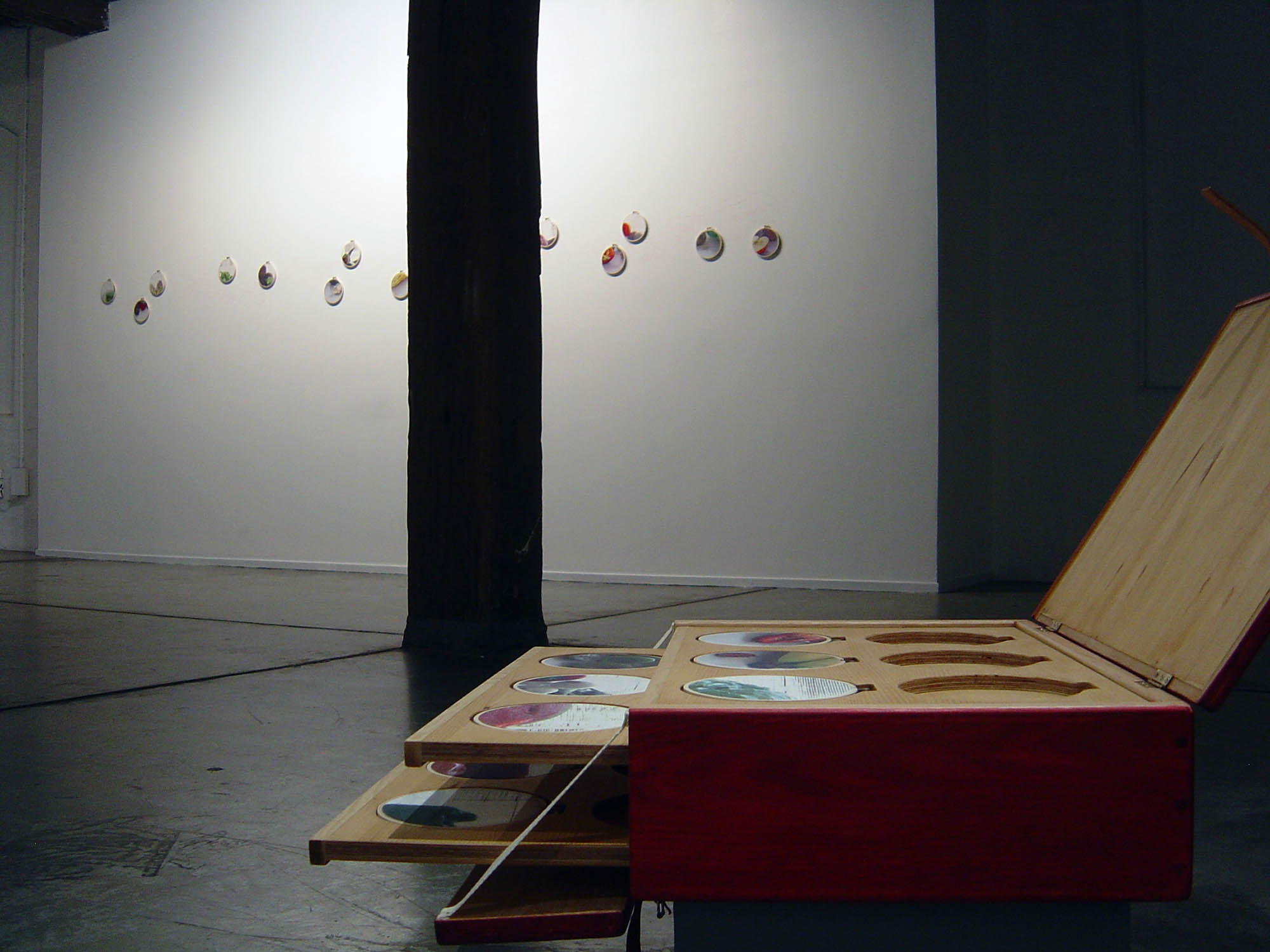
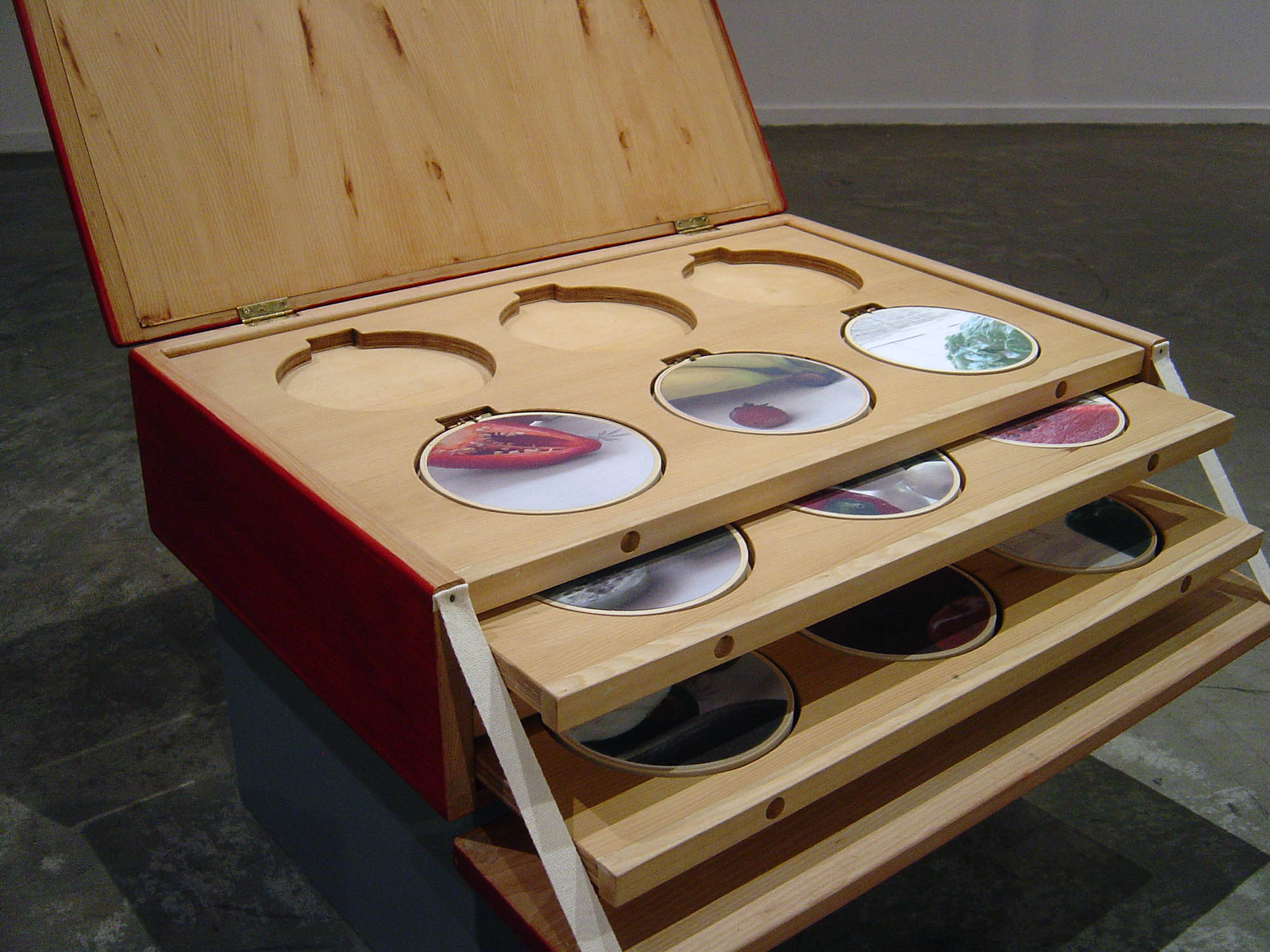
Maleta de madera de 61 x 42 x 15 cm
“Project of a Boundary, portable affairs”
Artspace, Sydney, Australia
2005
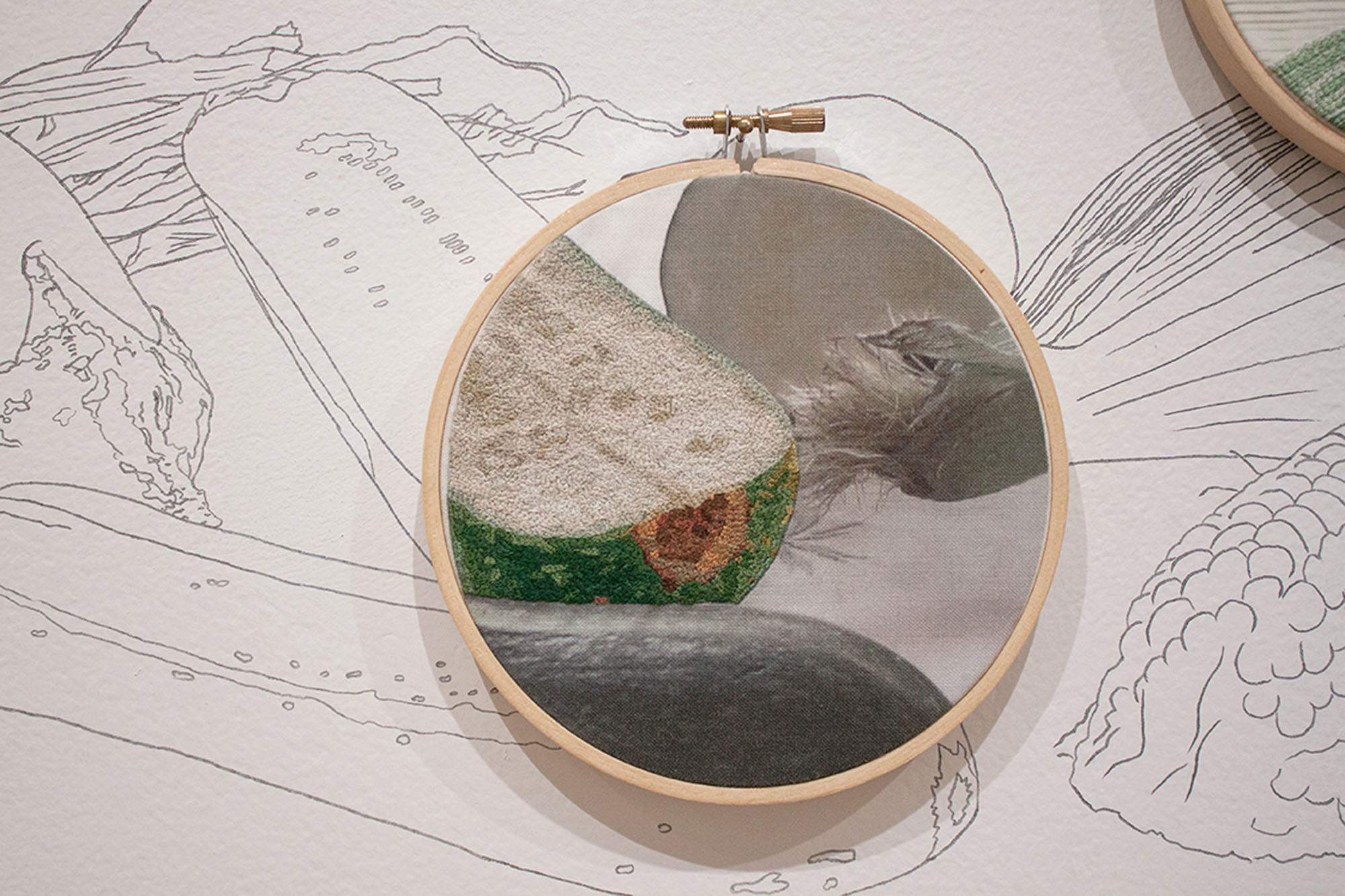
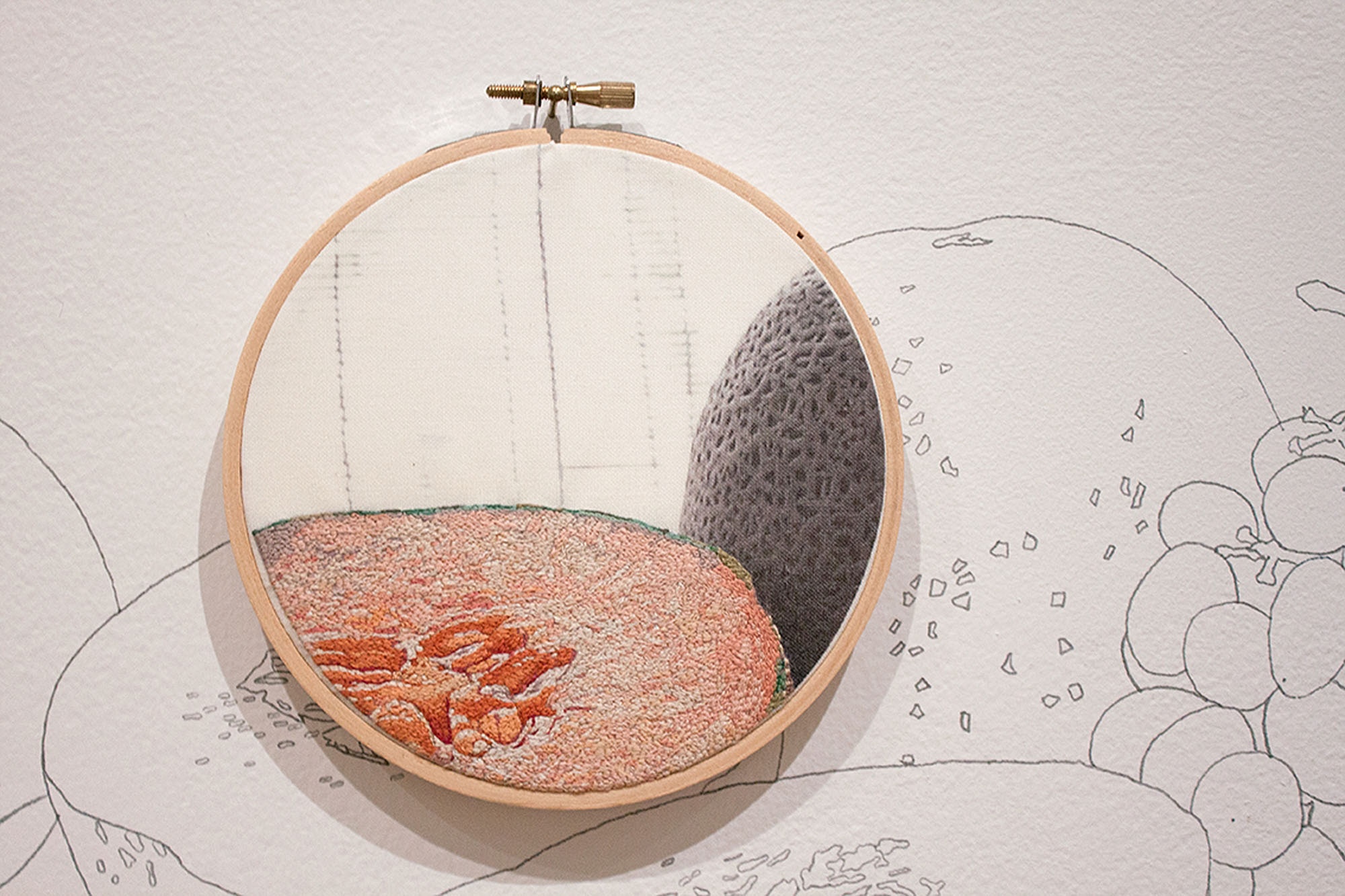
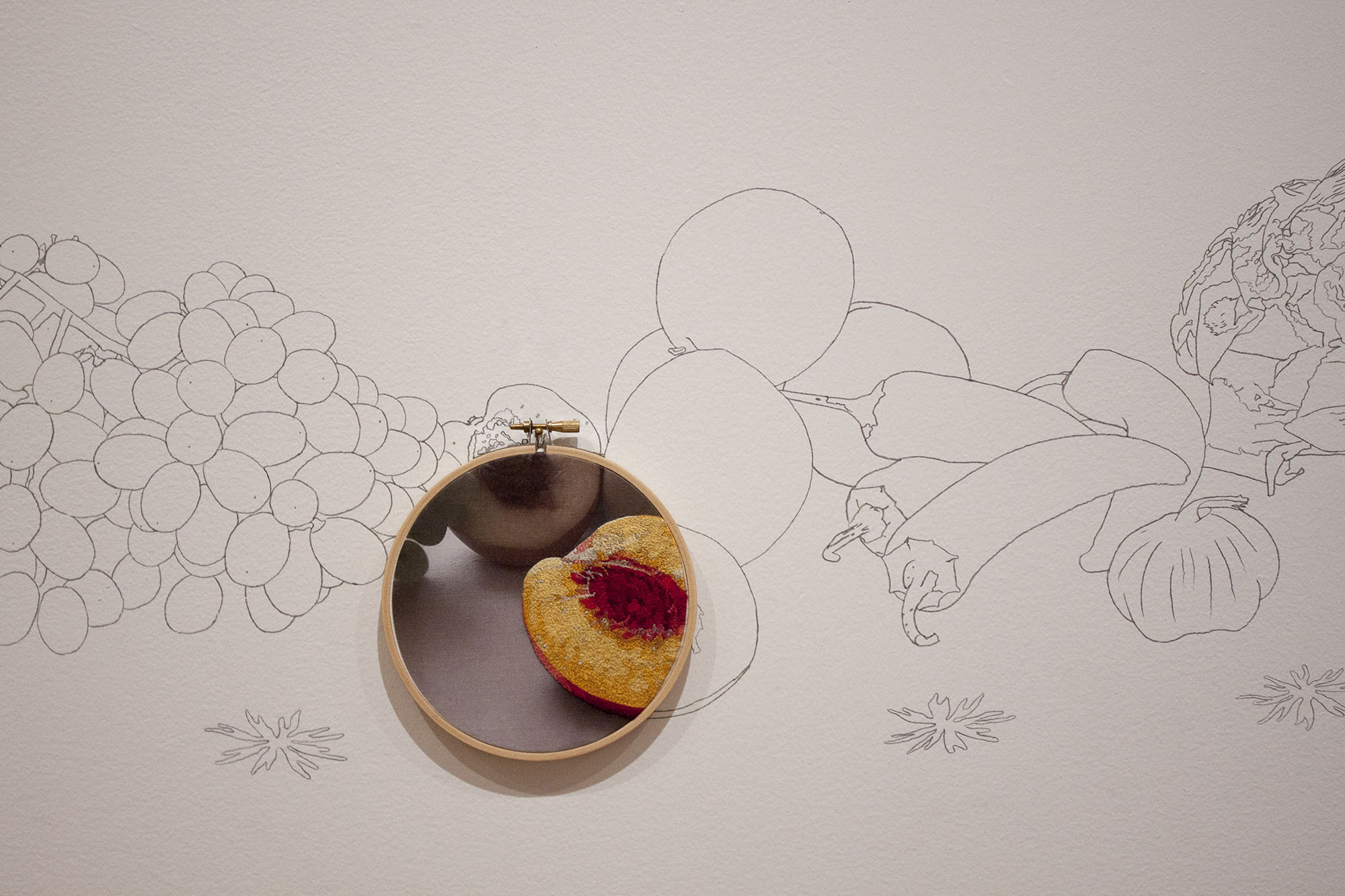
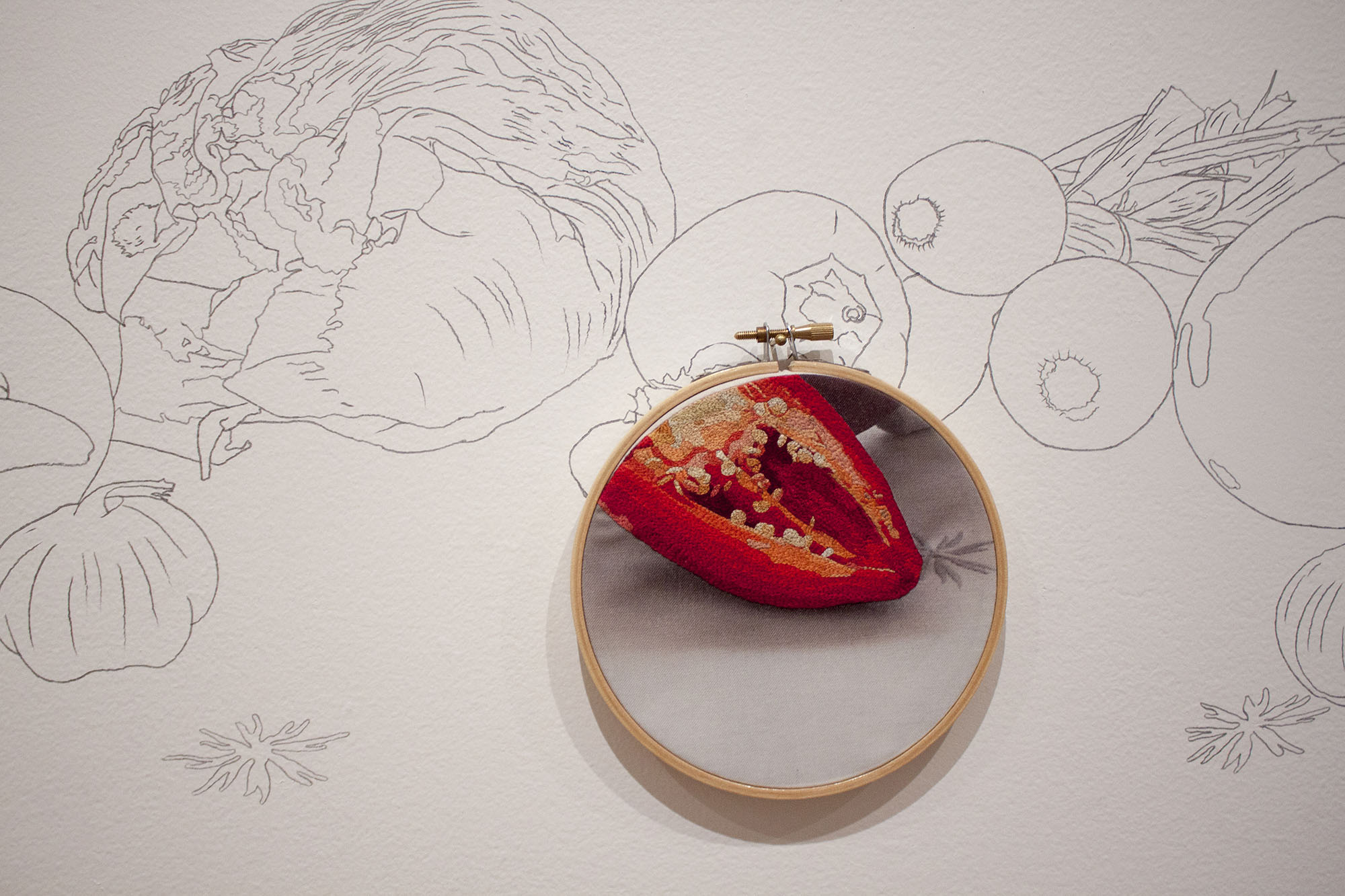
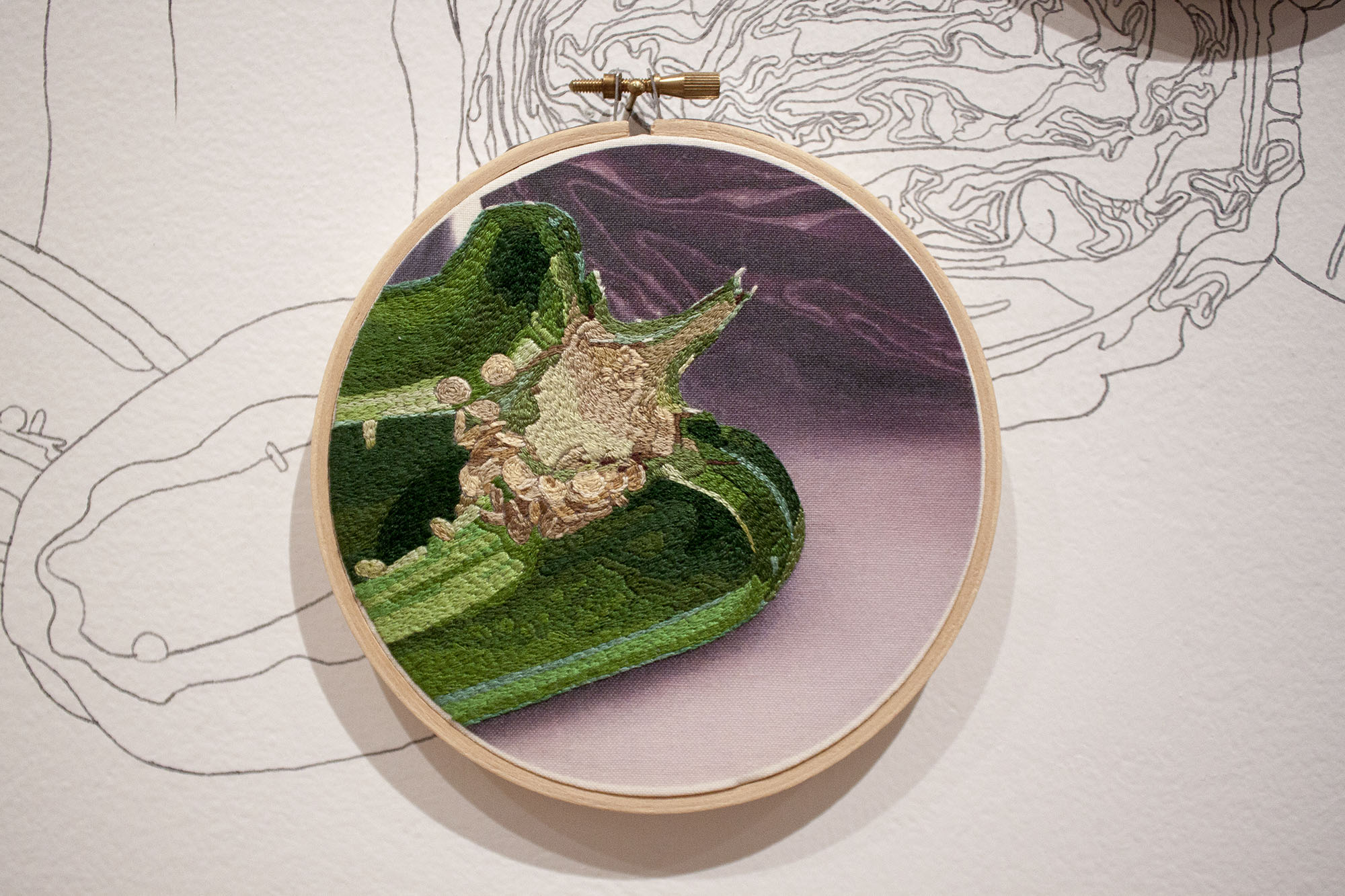
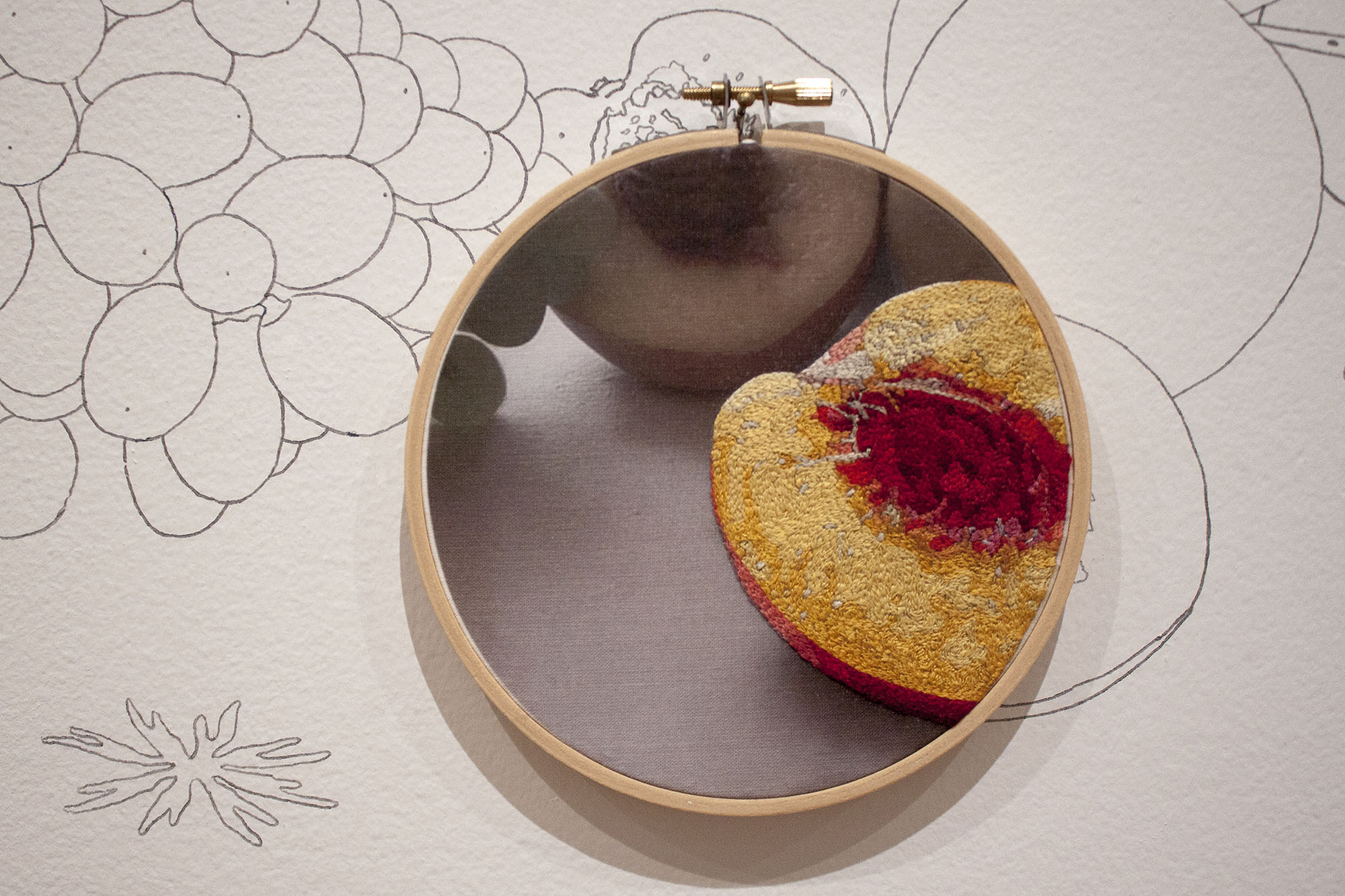
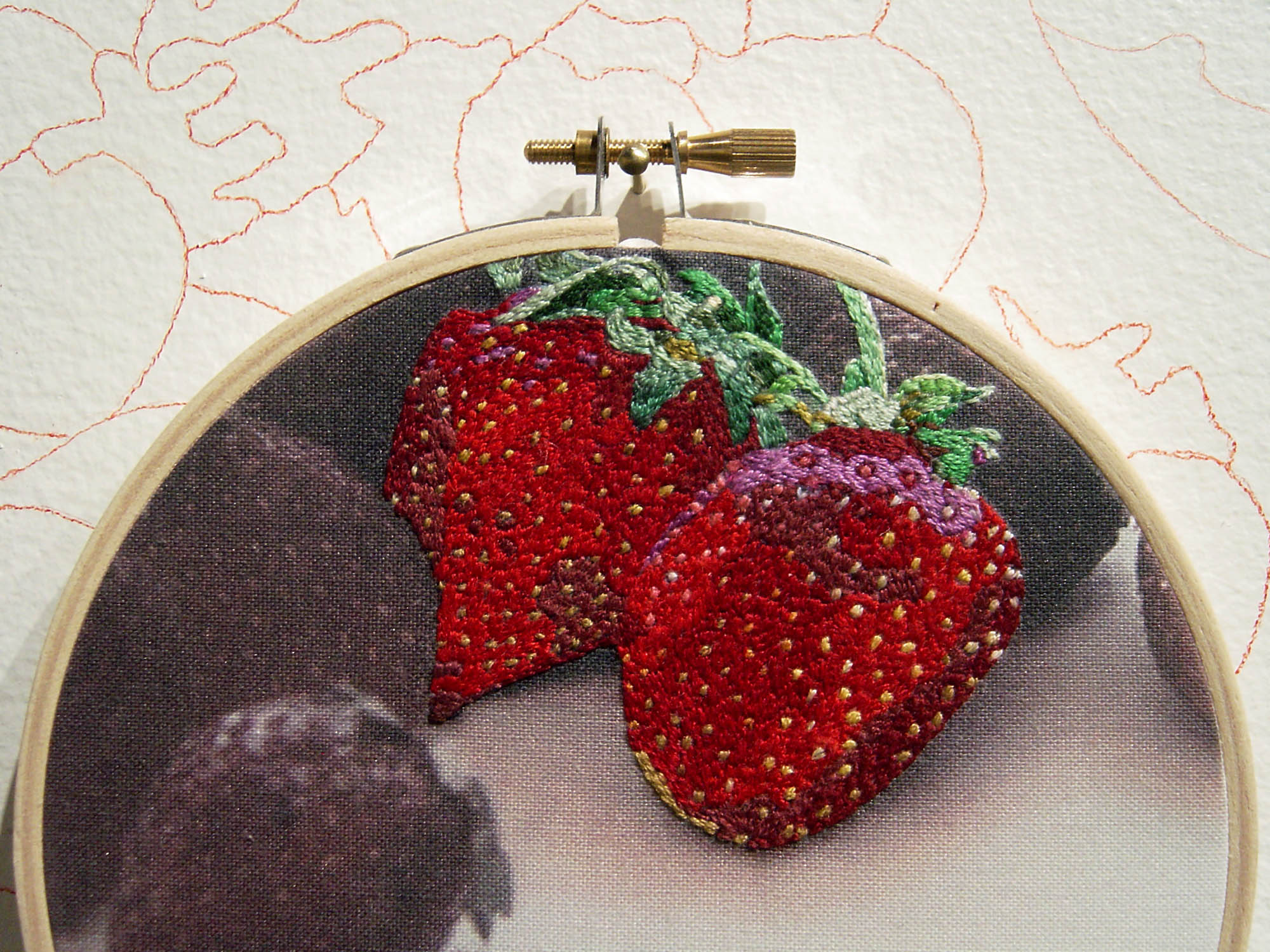
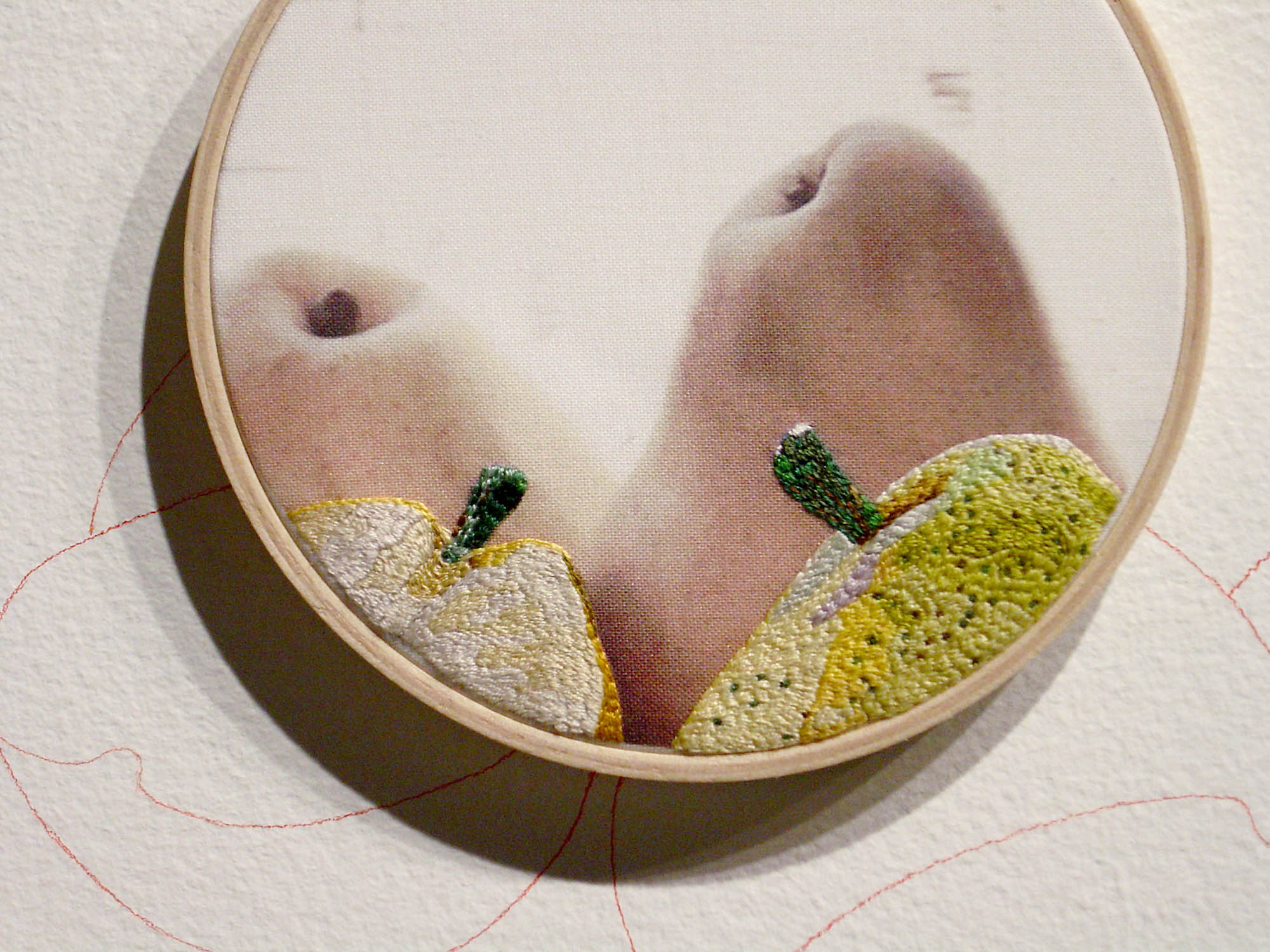
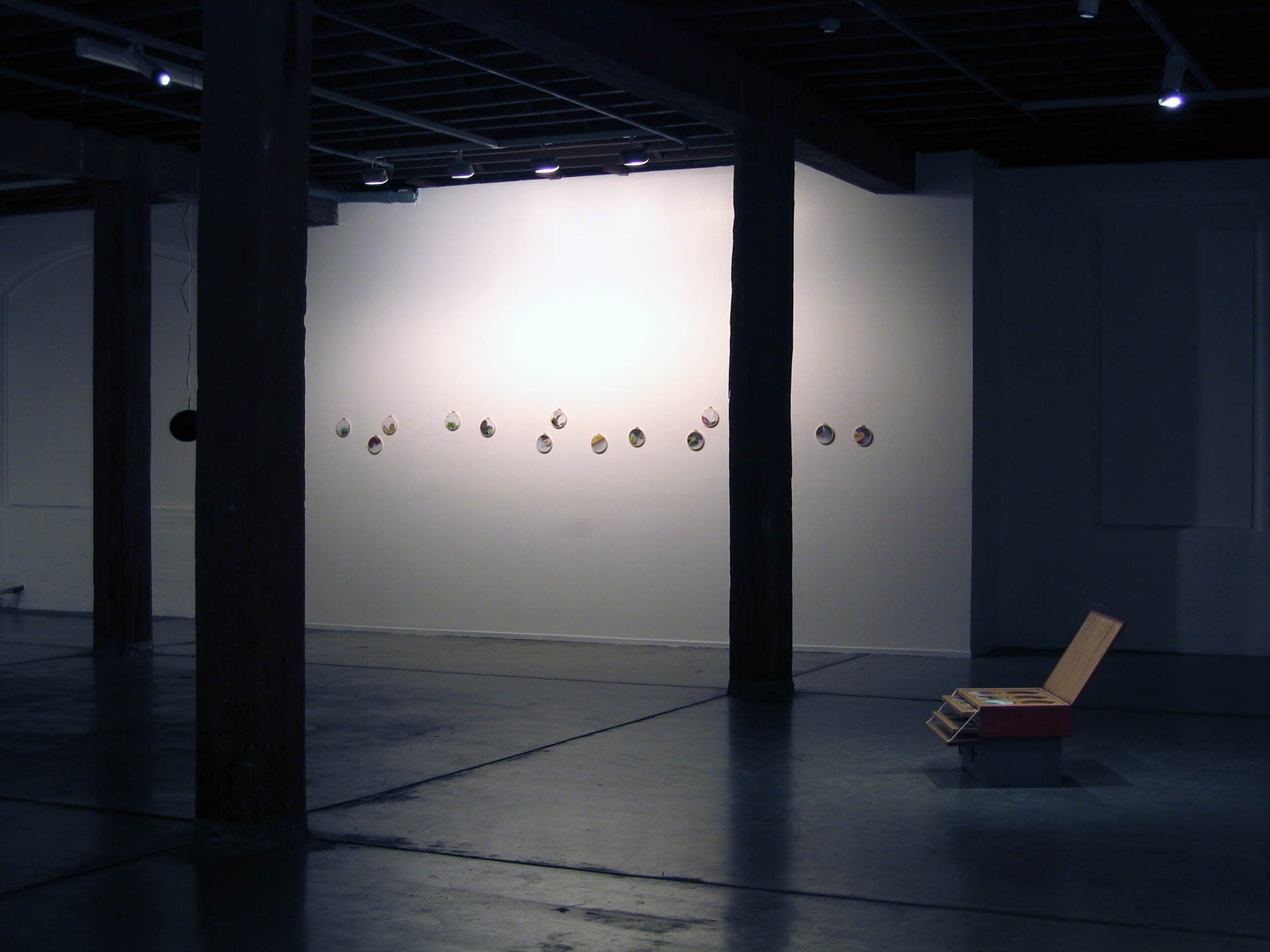
One hundred and sixty three shades of yellow, green, orange, red, purple, brown, grey and blue (so far) es un proyecto que comenzó durante una residencia en Artspace, Sydney el año 2005. Tomando en cuenta mi interés por el color y la cercanía que algunas de mis obras estaban teniendo con la pintura, decidí plantear un ejercicio que reflexionara en torno a este medio; específicamente, en torno a la naturaleza muerta como modelo paradigmático de esta disciplina. De este modo, realicé una serie de bordados a mano, donde mediante diminutas puntadas, reproduje imágenes fotográficas de frutas y verduras en escala natural.
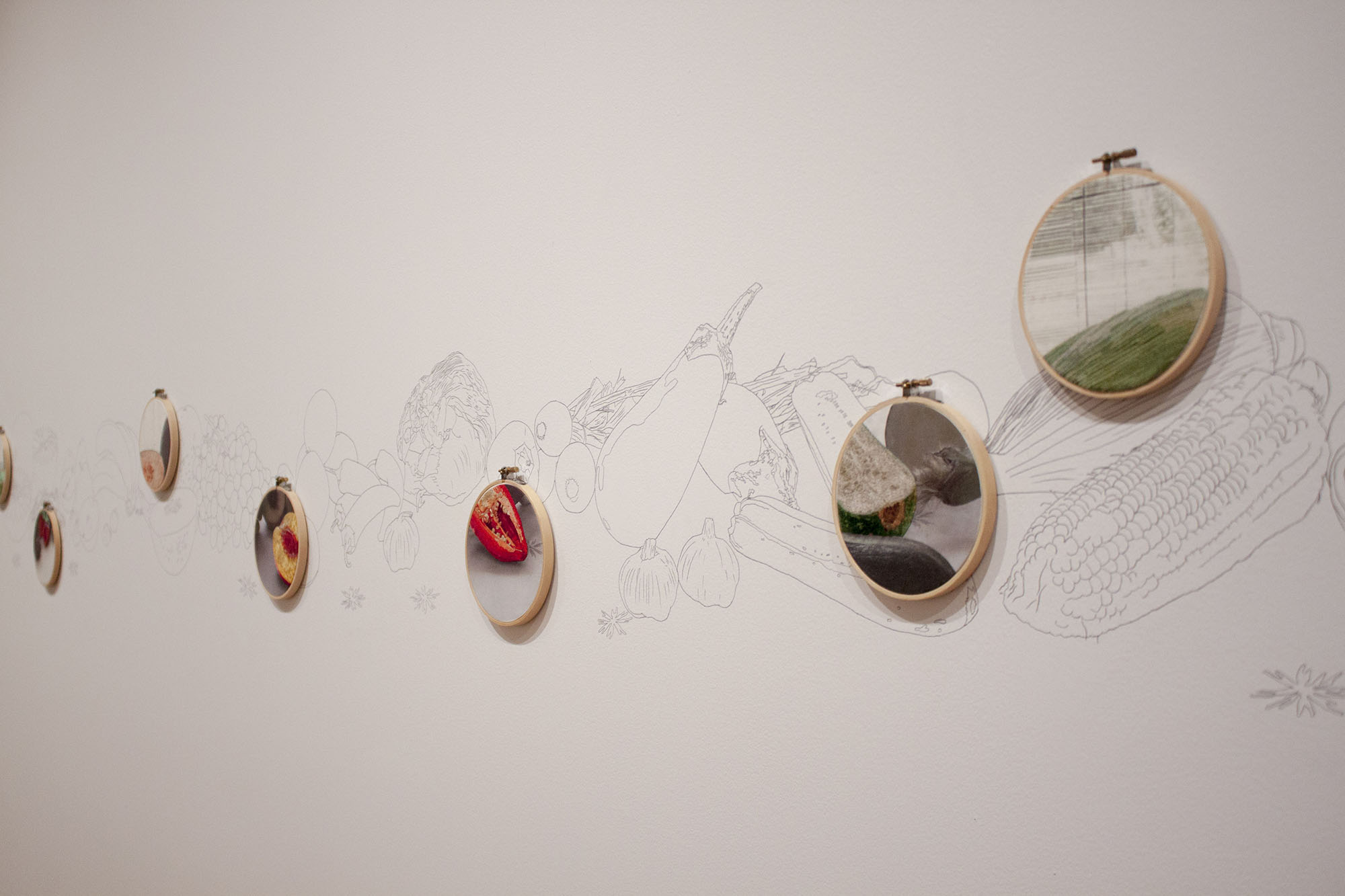
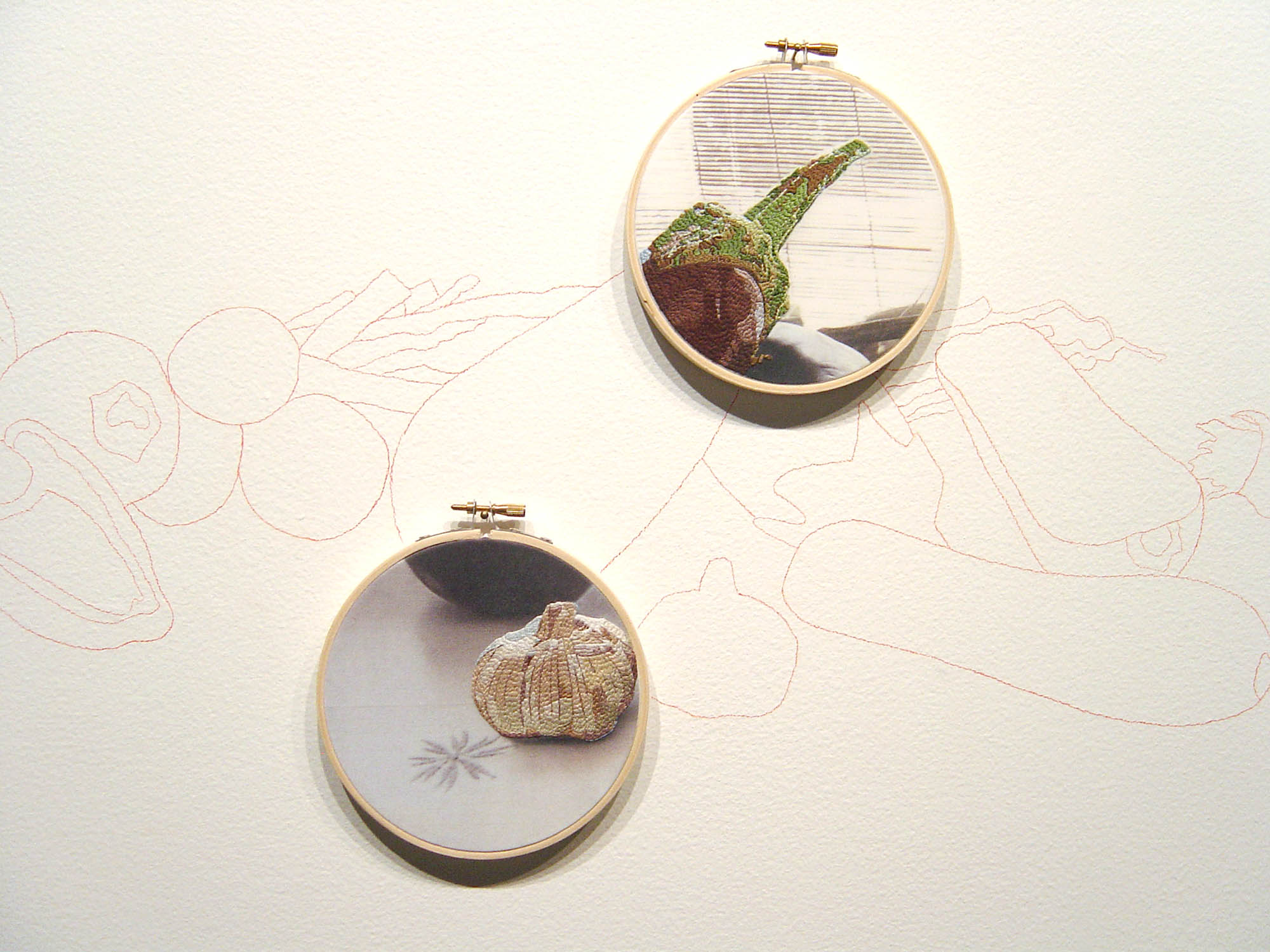
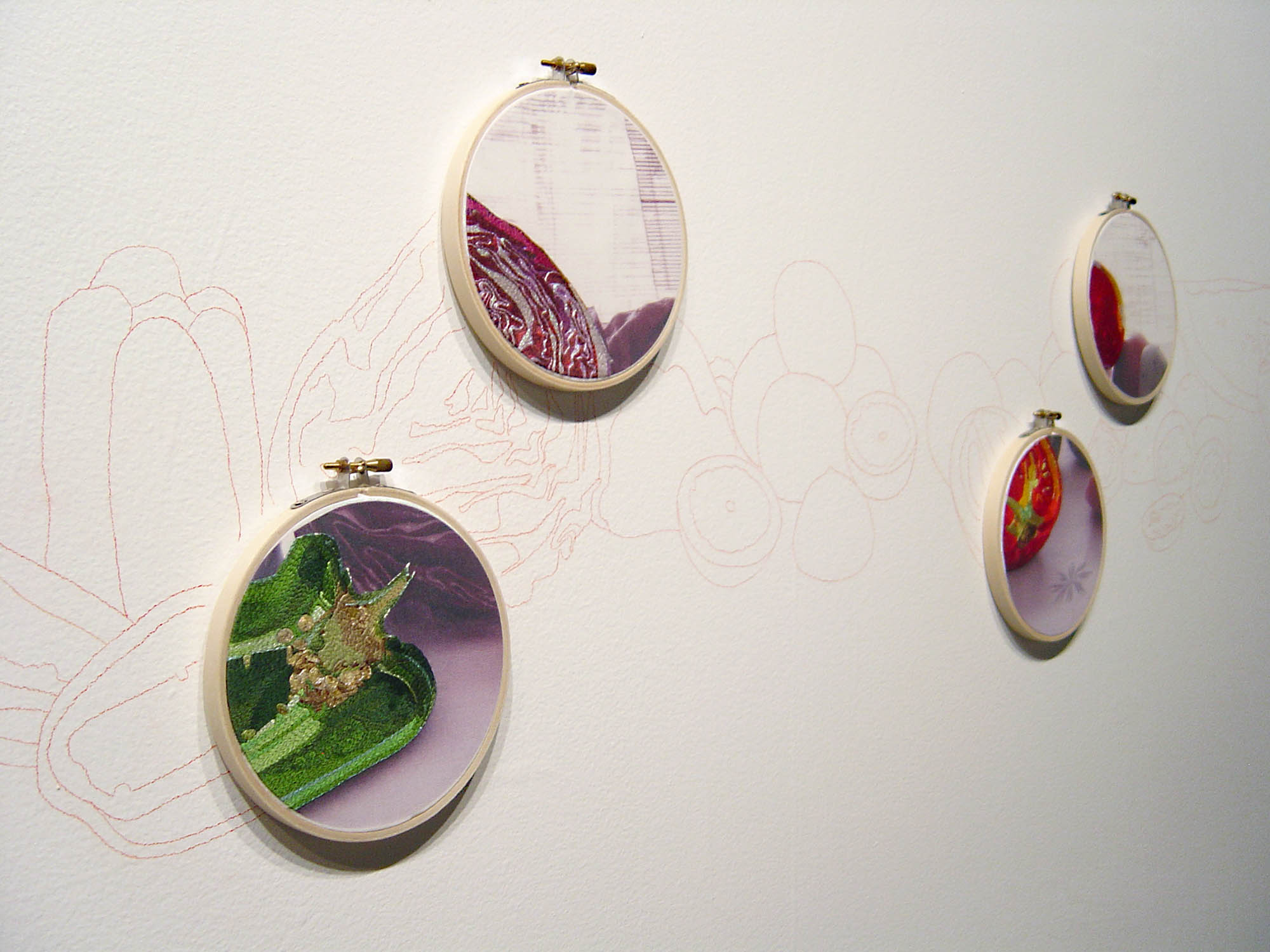
La obra también estaba compuesta por un dibujo a mano sobre el muro, dibujo que completaba linealmente las imágenes. Este proyecto continuó en el tiempo, de tal modo que cada vez que esta obra se exhibió, los bordados fueron cambiando, así como también el dibujo que lo acompañaba, transformando esta obra en un proyecto de sitio específico. El título de esta obra hace referencia a la cantidad de colores que utilicé para la realización de los primeros quince bordados, producidos durante mi estadía en Australia, asunto que pone en relevancia los procesos de producción de obra, por sobre la elección temática del modelo.
[…] Pequeños componentes que pueden ser reconfigurados para tener un sentido distinto en contextos distintos –trabajos con rompecabezas o letras– también recuerdan a los bloques de construcción de las imágenes digitales, los píxeles y su maleabilidad infinita. Este es uno de los temas del trabajo de Mónica Bengoa. Bengoa traslada imágenes digitales hacia dibujos a lápiz. Ella desglosa sus composiciones de color en un proceso que nos recuerda a los vínculos entre la imagen digital y la historia de la pintura, por ejemplo los experimentos con el color y la óptica que distinguen el trabajo de los impresionistas. Este proceso le permite manipular los elementos básicos de la creación de imágenes –tales como escala, color y composición– a modo de instalación, recorriendo las fronteras entre los distintos medios de la pintura, el dibujo, la fotografía digital y la instalación.
En trabajos anteriores Bengoa ha creado mediante este proceso representaciones desde el interior de su hogar a tamaño de valla publicitaria, dibujando en servilletas de papel, para subrayar la idea de múltiples componentes individuales formando un todo, tanto como para referirse a lo doméstico. Al ser fijadas a la pared por su borde superior, las servilletas de papel revolotean en respuesta a los movimientos de los espectadores que pasan, de pronto tornando la imagen borrosa a manera de una pantalla, y en algún sentido ‘interactiva’. Bengoa parece sugerir que las imágenes digitales no tienen el derecho de propiedad exclusiva de este título. Tal vez interpretemos activamente los píxeles al unirlos para representar una imagen totalmente consistente – de una manera que recuerda la descripción de Marshall McLuhan de la TV como un ‘medio frío’ que requiere la participación activa del espectador – pero esta manera de forzar diminutos componentes dispares hacia una coherencia es común a todo proceso de significación.
En su trabajo reciente Bengoa ha elegido otro tema entre el arte y la vida cotidiana: frutas y verduras. Fotografías de estos elementos arquetípicos de la pintura de naturaleza muerta han sido impresas sobre telas y tensadas sobre marcos circulares de bordado. Bengoa entonces ha bordado meticulosamente sobre partes de cada imagen, combinando cromática y concienzudamente los píxeles con el hilo. El resultado es una representación de colores vibrantes tridimensionales al estilo de una antigua artesanía doméstica, contrapuesta a una imagen digital. Bengoa ha instalado estos pequeños objetos exquisitos a lo largo del muro, adyacentes a un dibujo mural hecho con lápiz de color que representa el retablo completo del cual las bordaduras son detalles. Se nos recuerda nuevamente acerca de la relación entre componentes individuales y el todo sintético, y de la posibilidad de que esos fragmentos están siempre dispuestos a formar múltiples configuraciones. La instalación de Bengoa también incluye una caja de madera que guarda parecido con una caja de pinturas de artista o una maleta pequeña, en la cual se alojan otros marcos bordados, listos a ser extendidos más allá de sus confines hacia otros lugares y espacios.
Bengoa utiliza títulos para poner su proceso en primer plano, por ejemplo, al hacer una lista de la cantidad de colores de hilo que se necesitaron para trasladar la información digital fidedignamente hacia el bordado. En este caso, 163 tonos de amarillo, verde, anaranjado, rojo, púrpura, café, azul (hasta ahora) nos recuerda el largo trabajo de la artista, pero también la maravillosa complejidad de la imagen digital que se nos ha hecho un lugar tan común. El material en sí, el hilo de color, alimenta la metáfora del tejido de líneas dentro de la obra, y entre esta obra y otra, entre este lugar y otro.
Jaqueline Millner, catálogo Project of a Boundary, portable affairs, agosto 2005
2005
Drawing and 30 hand-made embroideries on photographic transfer on cotton cloth
13,7 cm (5,3 in) diameter each and wooden suitcase of 61 x 42 x 15 cm (24 x 16,5 x 5,9 in)
Overall dimensions 463 x 84 cm (15 ft x 33 in)
“Project of a Boundary, portable affairs”
Art Space, Sydney, Australia
2005
One hundred and sixty three shades of yellow, green, orange, red, purple, brown, grey and blue (so far) is a project that began during a residence in Artspace, Sydney in 2005. Given my interest in color and the proximity that some of my works were having with painting, I decided to perform an exercise that reflected on this media; specifically, around still life as a paradigmatic model of this discipline. In this way, I made a series of embroideries by hand, where by tiny stitches, I reproduced photographic images of fruits and vegetables in life-size scale.
The work also consisted of a hand drawing on the wall, which completed the images linearly. This project continued over time, so that every time this work was exhibited, the embroideries were changing, as well as the drawing that accompanied it, transforming this work into a site-specific project. The title of this work refers to the number of colors used for the production of the first fifteen embroideries –the ones produced during my residency in Australia–, an issue that underlines the processes of work production, over the thematic choice of the model.
[…] Small components that can be reconfigured to make different sense in different contexts –puzzle pieces or letters– also bring to mind the building blocks of digital images, pixels, and their infinite malleability. This is one of the themes of Mónica Bengoa’s work. Bengoa translates digital images into pencil drawings. She breaks down their colour compositions in a process that reminds us of the links between the digital image and the history of painting, for instance the experiments with colour and optics that distinguish the work of the Impressionists. The process allows her to play with the basic elements of image-making –such as scale, colour and composition– in the mode of installation, riding the boundaries between the different media of painting, drawing, digital photography, and installation.
In past works, Bengoa has created billboard-sized renditions of scenes from the interior of her home through this process, drawing on paper napkins to underline the idea of multiple individual components making up a whole, as well as referencing the domestic. When fixed to the wall by their upper edge, the paper napkins flutter in response to the movements of passing viewers, rendering the image at times fuzzy like a screen, and in a sense ‘interactive’. Bengoa seems to suggest that digital images do not have exclusive claims to this title. We may actively interpret pixels by putting them together to render a seamless image –in a manner that recalls Marshall McLuhan’s description of TV as a ‘cool medium’ that requires the viewer’s active participation– but this way of forcing disparate minute components into coherence is common to all sense-making processes.
In her current work, Bengoa has chosen another subject between art and everyday life: fruit and vegetables. Photographs of these archetypal elements of still life painting have been printed onto canvas and stretched onto round embroidery frames. Bengoa has then painstakingly embroidered over part of each image after meticulously colour-matching the pixels to thread. The result is a vibrantly coloured three-dimensional rendition in the style of an archaic domestic craft, counterpoised with a digital image. Bengoa has installed these exquisite little objects along one wall, adjacent to a wall drawing in coloured pencil that represents the complete tableau of which the embroideries are details. We are again reminded of the relationship between individual components and the synthetic whole, and of the possibility that these fragments are ever available to form myriad configurations. Bengoa’s installation also includes a wooden tool-box that resembles an artist’s paint-box or a small suitcase, in which other embroidered frames nestle, ready to extend beyond their confines into other places and spaces.
Bengoa uses titles to foreground her process, for example listing the number of colours of thread that were required to transpose the digital information faithfully to embroidery. In this case, 163 shades of yellow, green, orange, red, purple, brown, grey, blue (so far) reminds us of the artist’s time-consuming labour, but also of the wondrous complexity of the digital image that has to us become so commonplace. The material itself, the coloured thread, feeds into the metaphor of the line weaving within the work, and between this work and another, between this place and another.
Jaqueline Millner, Project of a Boundary, portable affairs catalog, August 2005